
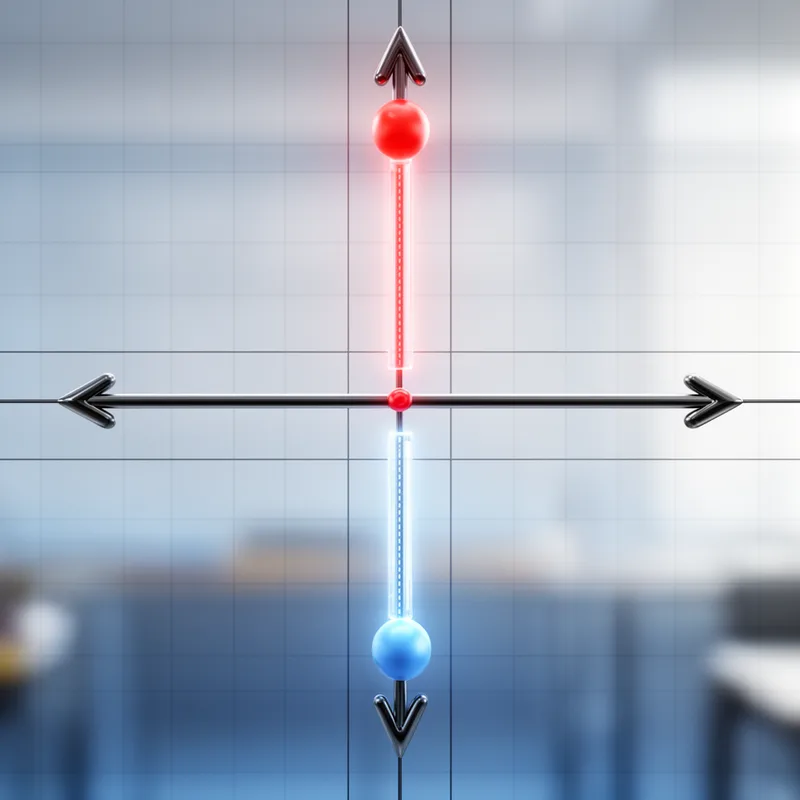
ordinate
- noun
- /ˈɔrdɪnɪt/
- Specialized
- And So what this is suggesting is that on the ordinate we plot plasma concentration normalized to dose per body weight, we talked about that.
- abscissas and ordinates
Examples
-
The abscissa shows duration in ms, and the ordinate shows movement distance.
Academic text (2011) -
The abscissa shows wavelength in nanometers; the ordinate shows transmittance, where 1.0 represents 100% transmitted light and 0 represents no transmitted light.
Academic text (1992) -
The ordinate shows the (maximum-minimum) illuminance difference.
Academic text (2010) -
Panel B corresponds to the y-axis (the ordinate) of the CVP graph of Figure 2.
Academic text (2005) -
Total revenues and total costs are represented on the y-axis (the ordinate) and the number of units sold is represented on the x-axis (the abscissa).
Academic text (2005) -
The ordinate depicts spine bone mineral density (BMD) measured in grams per centimeter squared.
Academic text (2003) -
Each participant was requested to view three values presented on the graph: (1) the amount of total revenues on the ordinate corresponding to the endpoint of the total-revenue line plotted on the graph.
Academic text (2005) -
In the graph, the ordinate represents the height of each point above the baseline.
-
For the scatter plot, the ordinate indicates the response time for each trial along the vertical axis.
-
To analyze the data correctly, ensure that the ordinate is labeled with the appropriate units of measurement.
Surface Forms
Etymology
Ordinate comes from the Latin root ordo, meaning 'order' or 'rank'. So the ordinate is the number that shows a point's vertical 'place' or 'height' on a graph, which is why the y-value is called the ordinate.

