

order Loricata
- noun
- Archaic
- Scientists no longer use the term order Loricata, preferring Crocodylia.
Examples
-
The family of crocodiles was once classified under order Loricata in older zoological texts.
-
Many scientists now refer to the order Loricata as Crocodylia.
-
You may encounter order Loricata in nineteenth-century natural history literature.
-
The order Loricata was once widely recognized in zoological classifications.
-
In many biology classes, students learn about the order Loricata and its former classification of crocodilians.
-
Older reference books might still mention order Loricata as the term for crocodiles before the modern classification emerged.
-
Discussions about the evolution of reptiles often include the historical significance of order Loricata in zoological studies.
Synonyms

An old scientific name for the group of reptiles that includes crocodiles and alligators
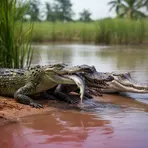
A group of large reptiles that eat meat and live in water and on land, like crocodiles and alligators
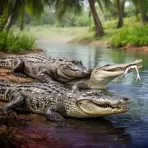
A group of large reptiles that live in water and eat meat, like crocodiles and alligators
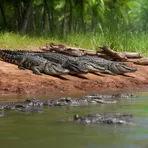
A group of large reptiles that live mostly in water like crocodiles and alligators

A group of large meat-eating reptiles that live in water and on land, like crocodiles and alligators
Surface Forms
Morphology
The meaning is directly compositional: 'order' (a taxonomic rank) combined with the taxon name 'Loricata' yields the zoological order containing those reptiles. Although 'Loricata' is a technical or historical label, if a learner knows both constituents the overall meaning is predictable and follows standard cross-linguistic taxonomic naming patterns.
Etymology
Order Loricata comes from the Latin word lorica meaning 'armor', so Loricata literally means 'armored ones' and gives the image of crocodiles' bony plates. Early scientists used this Latin name for the group, but today the animals are usually called 'Crocodylia', so the phrase once named the 'armored' order of crocodiles and their relatives.

