
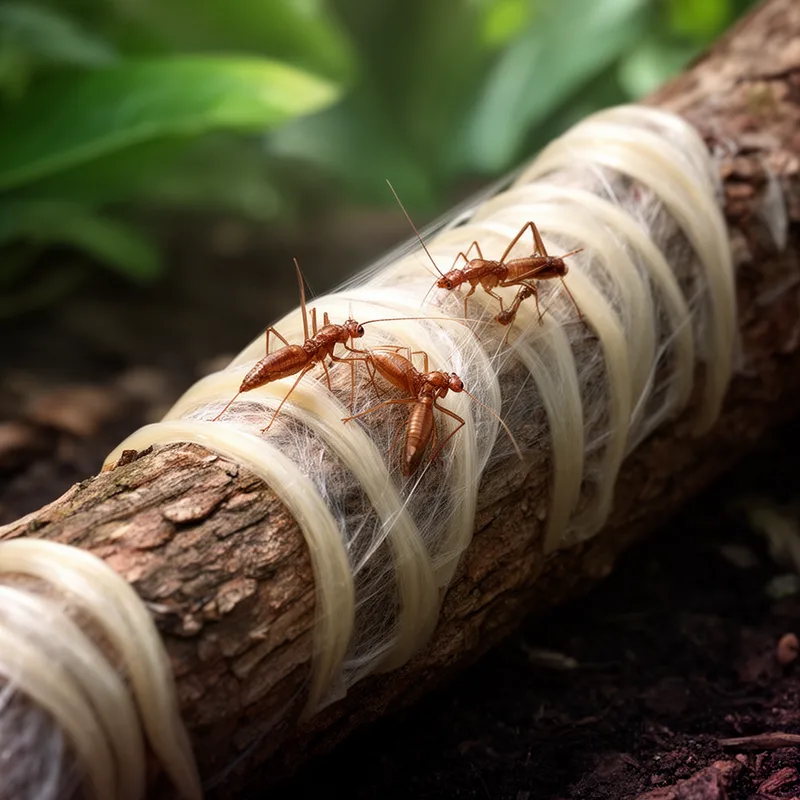
order Embiodea
- noun
- /ˈɔrdər ɛmˈbɪdiə/
- Archaic
- The unique silk-spinning behavior of the order Embiodea differentiates them from many other insect groups.
Examples
-
Scientists discovered a new species in the order Embiodea during their expedition in the rainforest.
-
In biology class, we studied how insects in the order Embiodea produce silk to build protective tunnels.
-
The order Embiodea consists of unique insects.
-
Many species belong to the order Embiodea.
-
In biology class, we studied how insects in the order Embiodea produce silk to build protective tunnels.
-
Scientists discovered a new species in the order Embiodea during their expedition in the rainforest.
-
The unique silk-spinning behavior of the order Embiodea differentiates them from many other insect groups.
Synonyms


 1
9.9
A group of insects that spin silk with their front legs to make small tunnels
 1
9.9
A small, thin insect that spins silk tunnels with its front legs
Small insects that make silk from parts on their front legs to spin protective tunnels or webs
Surface Forms
Morphology
The phrase is directly compositional: 'order' names a taxonomic grouping and 'Embiodea' is the proper name of that insect order, so their combination straightforwardly refers to that group of silk-producing insects. This follows standard biological naming patterns found across languages, so a B1 learner who knows both constituents can readily infer the meaning.
Etymology
Order Embiodea names a group of small insects. Order means a group and Embiodea refers to the tiny 'web spinners' that use their front legs to spin silk and build tube-like 'tunnels', so the name now means this group of insects known for making silk shelters.