
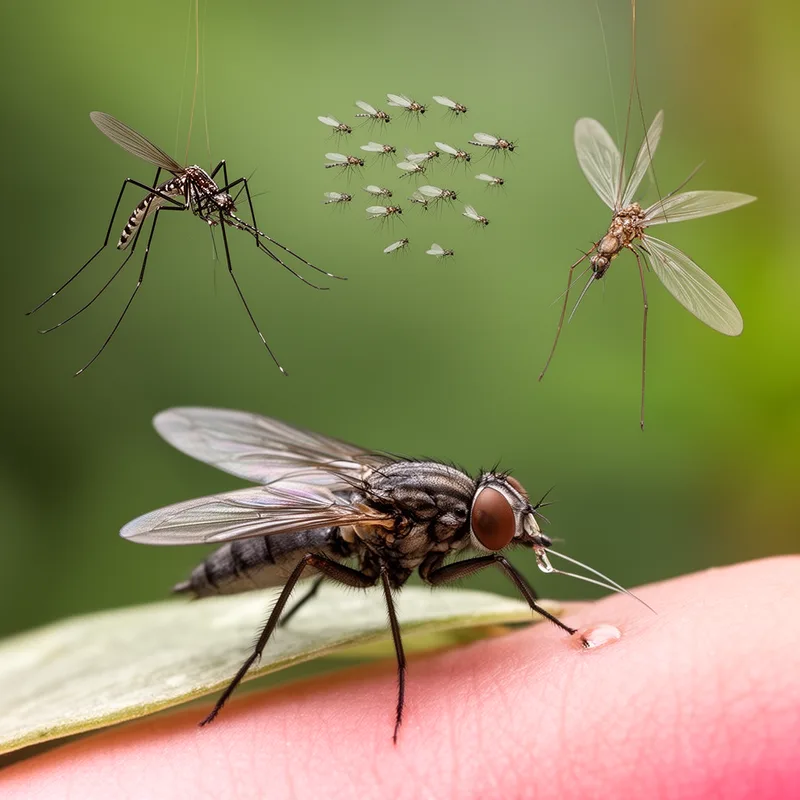
order Diptera
- noun
- /ˈɔrdər ˈdɪptərə/
- Specialized
- Many species in the order Diptera are known for their ability to transmit diseases.
Examples
-
The order Diptera includes many species of true flies that are critical for pollination.
-
Scientists study the order Diptera to better understand disease transmission by insects.
-
Craneflies are members of the order Diptera, despite their distinctive appearance.
-
The order Diptera includes familiar insects like houseflies, mosquitoes, and gnats.
-
The order Diptera includes many common insects.
-
Insects classified in the order Diptera, like mosquitoes, often have complex life cycles.
-
Entomologists study the characteristics of insects within the order Diptera to understand their ecological roles.
Synonyms

A group of insects with one pair of wings, like flies and mosquitoes
Surface Forms
Morphology
The phrase is fully compositional: 'order' is a taxonomic rank and 'Diptera' names the specific order of one-pair-winged insects, so a learner who knows both constituent meanings can derive that this refers to the insect order Diptera. This is a standard, cross-linguistically parallel taxonomic construction rather than an idiom, so its meaning is immediately transparent to learners familiar with the parts.
Etymology
Order Diptera comes from old Greek words meaning 'two wings' — di for 'two' and ptera for 'wings'. Because these insects like flies and mosquitoes have just one pair of wings, the name helps you remember they are the 'two-wing' insects.

