
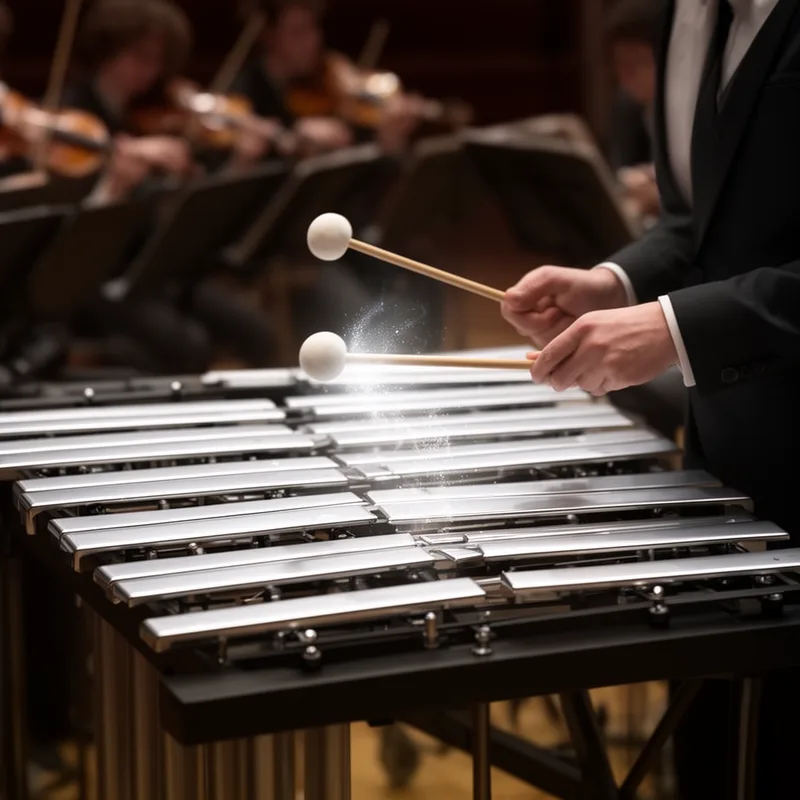
orchestral bells
- noun
- /ˈɔrkɛstrəl bɛlz/
- The percussionist carefully played the orchestral bells during the symphony’s delicate passage.
Examples
-
Composers often use orchestral bells to add bright, ethereal tones to orchestral music.
-
Children were fascinated by the shimmering sound of the orchestral bells at the concert.
-
The orchestral bells added a beautiful sound to the symphony.
-
Can you hear the orchestral bells in the background?
-
Composers often use orchestral bells to add bright, ethereal tones to orchestral music.
-
The percussionist carefully played the orchestral bells during the symphony's delicate passage.
-
Children were fascinated by the shimmering sound of the orchestral bells at the concert.
Synonyms

 14
4.4
14
4.4

A set of tuned metal bells that you hit with a hammer to make musical notes
 5
8.2
5
8.2
A musical instrument with metal bars you play with small hammers that makes a bright sound

 1
8.4
1
8.4
A musical instrument with metal bars that you strike to make notes
How Many Bells

Surface Forms
Morphology
The meaning is transparently built from 'orchestral' (used in an orchestra) + 'bells' (ringing percussion instruments), so a learner who knows both constituents can infer it denotes bell-like percussion used in an orchestra (e.g., glockenspiel/keyboard bells). This straightforward noun-modifier composition is cross-linguistically common and follows standard English patterns, making it immediately comprehensible to a B1 learner.
Etymology
The noun orchestral bells comes from the instrument's look and sound: metal bars set on a frame and hit with small hammers so they ring like little bells in an orchestra. That clear, 'bell-like' ringing is why composers use them to add a bright, dreamy tone to music.