
orbicularis
 1
9.9
1
9.9

- noun
- /ɔrˈbɪkjʊlərɪs/
- Specialized
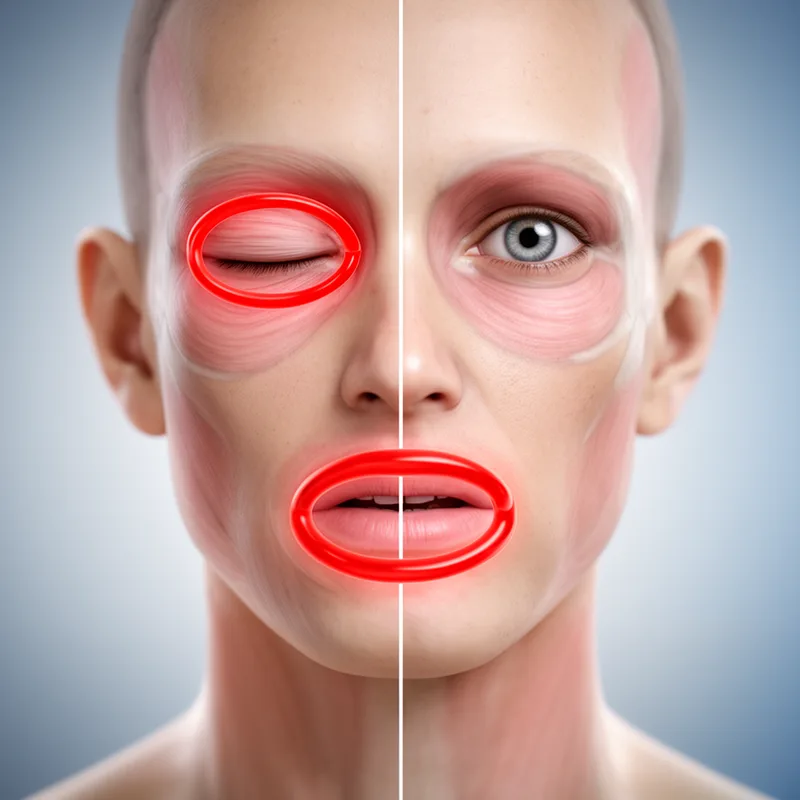
- When you smile, the orbicularis oculi muscles around your eyes help create that joyful expression.
- orbicularis oculi
- orbicularis oris
- orbicularis muscle
Loading YouTube…
Watch on YouTubeWhat we're really drawing is the structure underlying the mouth, the orbicularis oris, the muscle group.
- What we're really drawing is the structure underlying the mouth, the orbicularis oris, the muscle group.
Examples
-
The orbicularis oculi muscle allows you to close your eyes tightly when you sleep.
-
Different smile types may be identified on the basis of morphological characteristics of the face, including the direction of lip corner pull, muscular controls in the lower face that influence the shape of the mouth and extent of its opening, and coactivation of the orbicularis oculi muscles surrounding the eyes.
Academic text (2015) -
If you want to have a great smile, you need to use the orbicularis oculi muscle, which is, in other words, the eyes.
-
What we're really drawing is the structure underlying the mouth, the orbicularis oris, the muscle group.
-
In both cases, the muscles surrounding the eyes, the orbicularis oculi, are generally not contracted (see Table 1).
Academic text (2015) -
The most important muscle involved is the orbicularis oris muscle because it is used to pucker the lips.
-
This finding was potentially due to the lower intensity of the spontaneous smiles studied, and thus the zygomatic muscle not contracting hard enough to innervate the orbicularis oculi, as was the case with the posed smiles they examined.
Academic text (2015) -
A cleft cuts the upper lip on the left, vertically, at an angle, and through all its layers, including the skin and orbicularis oris, and extends to and widens the ipsilateral nostril.
Academic text (1996) -
Finally, there have been suggestions that the adjunct use of low-dose Botox injected into the orbicularis may reduce the clumping of Artecoll and, therefore, be useful to prevent lumpiness (5).
Academic text (2012) -
The orbicularis oris muscle helps you pucker your lips when you kiss.
Surface Forms
Etymology
Orbicularis comes from the Latin root orbis 'circle' and the little form orbiculus 'little circle', the same root you see in orb and orbit. So an orbicularis is a ring-shaped muscle that opens and closes parts like the eyelid or mouth.