
optic disk


 1
7.1
1
7.1
- noun
- /ˈɑptɪk dɪsk/
- Specialized
- Other factors, such as retinal vessel closure and neovascularisation, either subretinally on the optic disc or peripherally, need to be identified since they may require different therapeutic measures.
- optic disk area
Examples
-
These ophthalmologic signs include color vision changes, optic disc pallor, papilledema, and a decrease in venous pulsations.
Academic text (2002) -
One month later, his visual acuities had not changed, but a new focus of HCMV retinitis was found in the superotemporal region of his right eye and a new lesion at his left optic disc.
Academic text (1995) -
At 5 months, his vision deteriorated, and at 6 months, his vision was reduced to counting fingers in both eyes due to optic disc involvement.
Academic text (1995) -
This was accompanied by extensive optic disc involvement leading to blindness in both eyes (Figure 2g and h).
Academic text (1995) -
Mutations in EFEMP1 are involved in decreasing the optic disc area (186).
Academic text (2018) -
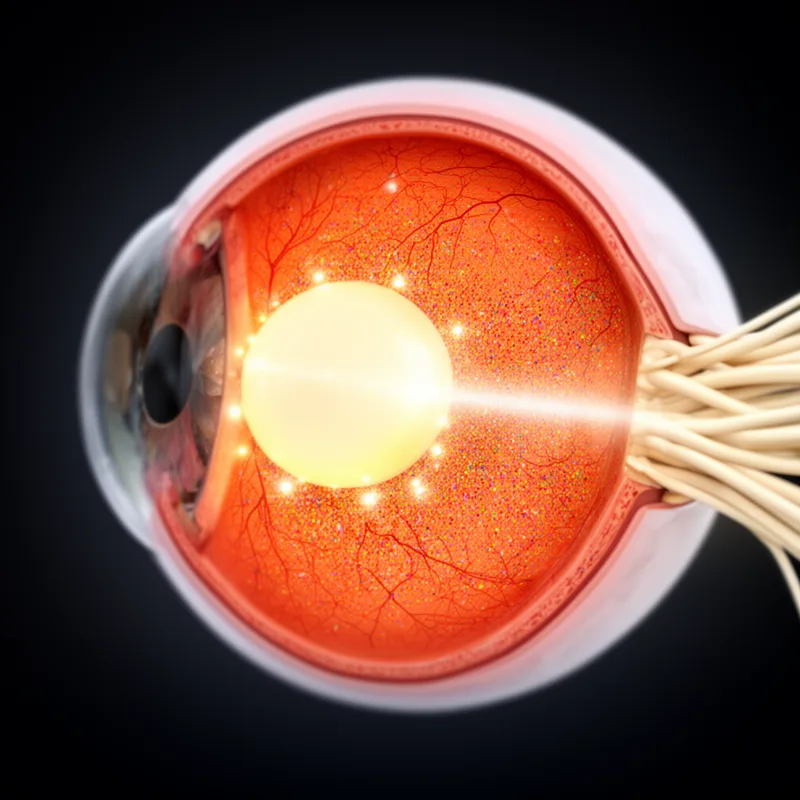
The optic disk is the point on the retina where the optic nerve enters the eye, creating a blind spot.
-
Optometrists often assess the health of the optic disk during eye exams to check for any abnormalities.
-
During the examination, the doctor noted that the optic disk appeared normal and free from swelling.
Synonyms
 1
4.8
1
4.8
A small area in the eye where the optic nerve enters and you cannot see
Surface Forms
Morphology
The noun-noun compound is directly compositional: 'optic' (relating to the eye/vision) combined with 'disk' (a round plate/area) yields a round area related to the eye. This follows a common and predictable English formation pattern (and similar constructions exist in other languages), so a B1 learner who knows both constituents can infer the basic meaning.
Etymology
The noun optic disk names a small round spot in the eye: optic means eye and disk means a round spot where the nerve that carries sight leaves the eye. That place has no light-sensing cells, so it creates a 'blind spot' in our vision.