

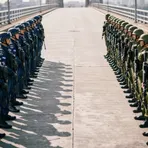
opposite sides of the barricades
- idiom
- The two candidates stood on opposite sides of the barricades during the debate.
Examples
-
During the negotiation, both leaders came from opposite sides of the barricades, making compromise difficult.
-
In the latest election, the parties found themselves on opposite sides of the barricades.
-
After the election, they found themselves on opposite sides of the barricades in every meeting.
-
Historians often take opposite sides of the barricades when interpreting controversial events.
-
After the election, they found themselves on opposite sides of the barricades in every meeting.
-
During the negotiation, both leaders came from opposite sides of the barricades, making compromise difficult.
-
In the latest election, the parties found themselves on opposite sides of the barricades.
Synonyms

 523
2.8
523
2.8

Two people or groups who disagree in an argument
 294
4.5
294
4.5
A situation when people or groups meet in direct conflict, often angrily
 90
6.2
90
6.2
A time when two opposing groups face each other and neither moves
 5
5.2
5
5.2
A clear division between people or groups in a conflict
 2
3.9
2
3.9
A view that disagrees with your opinion in a discussion

An argument that opposes another idea

A discussion that shows two opposite views

A clear division between two groups that shows who supports each side in a dispute
Antonyms


How Opposed

Surface Forms
Morphology
opposite + side + of + the + barricade
The meaning is directly built from 'opposite' (contrary) + 'sides' (parties/positions) and 'barricades' (barrier): the image of parties separated by barricades straightforwardly maps onto being in opposing groups. This spatial/division metaphor is common and predictable, so a B1 learner who knows the constituents will likely infer the intended sense.
Etymology
Opposite sides of the barricades comes from images of street protests, where two groups stand on different sides of a line of barricades facing each other. So, the clear picture of people separated and ready to fight explains why the phrase means being in 'opposing groups' or 'opposite positions' in a debate or dispute.