
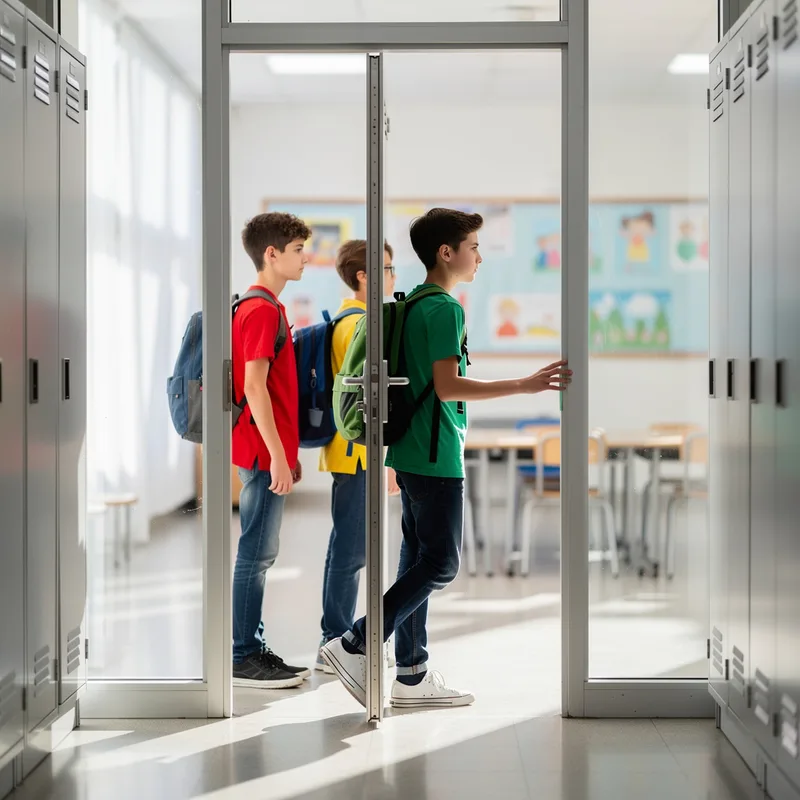
one by one
 186
1.4
186
1.4

- idiom
- The teacher asked the students to present their projects one by one in front of the class.
- remove one by one
- go one by one
- begin one by one
Loading YouTube…
Watch on YouTubeAll of the sisters just one by one, just die.
- All of the sisters just one by one, just die.
- Do you eat fries one by one or do you go for it?
- Rather than lose your teeth slowly, one by one, one by one, you lose.
- OK, so then start adding them in one by one and see what you tolerate.
- and then he built that out one by one. And The thing is,
- And his new friends said, one by one, for each myth, let's look that up together.
- No, no, no, no, not one by one.
- We'll look at those one by one, starting with the mass of the Higgs boson.
- Not just that, they couldn't know if the police would drag one by one in for questioning right away.
- But now with software, we can do that one by one.
Examples
-
So let's go through these problems kind of one by one that we see out here and fix them.
-
Tim holds the door as, one by one, we rise out of the hole.
Fiction book (1991) -
Ultimately, these dead skin cells fall off, usually one by one for healthy skin.
-
And I started looking around and one by one, like people started kind of coming to their feet.
-
We began by introducing ourselves one by one using the message stick.
Academic text (2013) -
The other performers step forward one by one to stand at her side.
Academic text (2001) -
The Caboclos began to arrive one by one as they were called.
Academic text (2003) -
The owls stopped their sounds, and one by one, they all flew away and never came back.
Academic text (2000) -
We'll look at those one by one, starting with the mass of the Higgs boson.
-
I watch the boat dock, and the arrivals file quietly one by one from the vessel.
Academic text (2012)
Synonyms
 148
2.1
148
2.1
Each person does it alone rather than together
 136
2.5
136
2.5
Happening one at a time and not with others
 107
1.9
107
1.9
Handle each person or thing in turn, not all at once
 23
2.8
23
2.8
Done in separate parts, each finished before the next
 17
7.0
17
7.0
Happening in small parts over time instead of all at once
 17
2.0
17
2.0
With no pause between actions or events
 17
2.3
17
2.3
Things follow each other without a break
 9
4.1
9
4.1
Happening one after another without a break
 9
4.5
9
4.5
Things happen one after the other in a fixed order
 7
4.4
7
4.4
Separately for each person or case
 5
4.6
5
4.6
One at a time rather than in a group
 1
3.4
1
3.4
People make or sell items one at a time instead of in bulk
 1
8.2
1
8.2
Each person or thing on its own, not as a group

Happens slowly, a little at a time
Antonyms


How Simultaneous

Surface Forms
Morphology
The meaning 'one after another' is directly and compositionally derived from 'one' (a single unit) combined with 'by' indicating distribution or sequence, so a learner who knows the constituents can infer the phrase. This per-unit/serial pattern is cross-linguistically common and follows a transparent English construction, making it immediately comprehensible to a B1 learner.
Etymology
One by one paints a simple picture: imagine people entering a room, each one coming through the door after the last person. So it means 'one after another', not all at the same time.