

one-acter
- noun
- /ˈwʌnˌæktər/
- She wrote a one-acter that won her first prize in the playwriting contest.
Examples
-
The drama club decided to perform a one-acter for the school's spring festival.
-
We enjoyed several funny one-acters during the evening showcase.
-
The theater showcased a brilliant one-acter last night.
-
She prefers to write one-acters because they are concise.
-
The theater's latest production features two original one-acters that showcase exceptional talent.
-
At the festival, many audiences were captivated by a series of short one-acters performed by emerging playwrights.
-
She wrote a charming one-acter that captured the essence of a warm summer evening.
Synonyms

 3
3.9
3
3.9

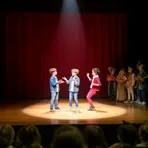
A short play with only one act

 1
8.0
1
8.0
A short acted scene often performed during a larger show
How Long

Surface Forms
Morphology
Etymology
One-acter comes from one ('single') + act ('a part of a play'), with the ending -er used to make a name for the thing. So a one-acter is simply a short play that has just one act, which is why it is shorter than a full-length play.