
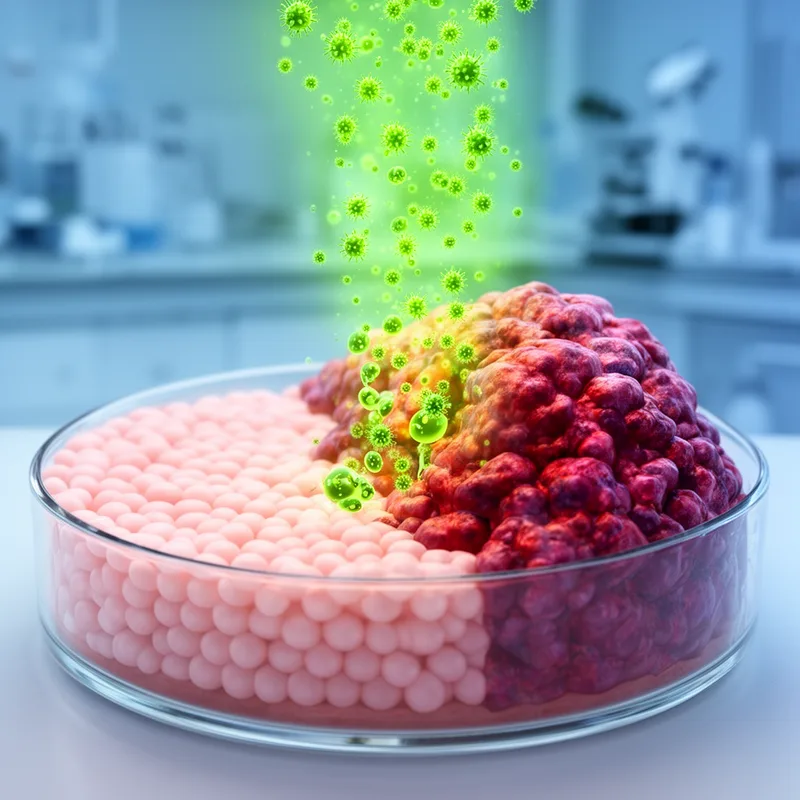
oncogenic
 1
8.8

- adjective
- /ˌɑnkoʊˈdʒɛnɪk/
- Specialized
- These mutations confer a "gain of (methyltransferase) function" to EZH2, determining its oncogenic activity.
- oncogenic protein
Examples
-
Although the majority of infections cause no clinical symptoms and are self-limited, persistent infection with oncogenic types can cause cervical cancer in women.
Blog text (15) -
Regulation of the cell cycle is another mechanism of oncogenic regulation induced by EZH2.
Academic text (2017) -
A strongly oncogenic miRNA is miR-155.
Academic text (2016) -
So it's the oncogenic mutation in collaboration with loss of tumor suppression.
-
Moreover, it is specifically involved in the regulation of oncogenic potential, having a direct role in malignant phenotype.
Academic text (2017) -
Oncogenic miR-21 is highly overexpressed in several solid tumors, including glioblastoma.
Academic text (2016) -
It inhibits multiple oncogenic pathways as well as stimulates the anti-tumor immune response to induce cancer cell death.
Academic text (2016) -
As a result of their rather unique predisposition to act as both tumor suppressors and oncogenic modulators, several instances have been revealed where the expression of a miRNA is either lost or repressed in cancer.
Academic text (2016) -
Alterations in protein glycosylation are among the main molecular events accompanying oncogenic transformations in the gastric and colorectal tracts 14-16.
Academic text (2016) -
High-risk human papillomaviruses (HPVs) are known to be oncogenic and can lead to cervical cancer.
Synonyms
 9
6.5
Able to cause cancer in people or animals


 1
8.1
Causing abnormal lumps to grow in body tissue
How Oncogenic
- Specialized
1
8.8

- Specialized
9
6.5
Surface Forms
Morphology
Etymology
The word oncogenic comes from Greek parts onco- meaning 'tumor' or 'mass' and -genic meaning 'producing', like in generate. So something oncogenic is 'tumor-producing' and can cause cancer.