
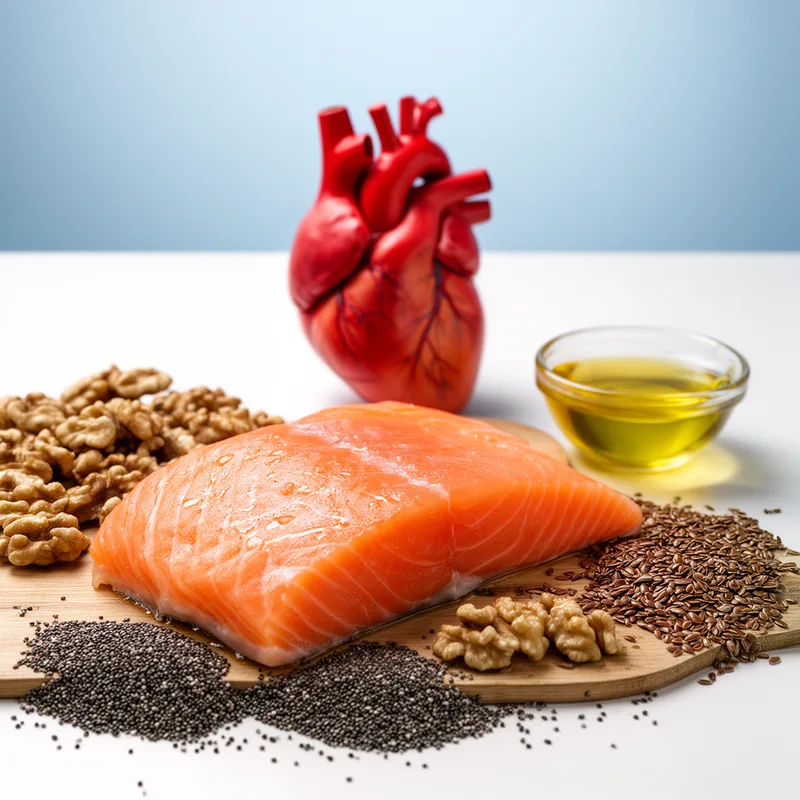
omega-3 fatty acid
 3
3.7
3
3.7

- noun
- /oʊˈmeɪɡə θriː ˈfæti ˈæsɪd/
- Specialized
- Choose foods that have ingredients such as omega-3 fatty acids and oils.
- omega-3 fatty acid content
- omega-3 fatty acid levels
- consumption of omega-3 fatty acids
Examples
-
Health effects of omega-3 fatty acids.
Academic text (2012) -
It's got omega-3 fatty acids.
-
Fish oil is made up of omega-3 fatty acids, which also make up the brain.
Blog text (25) -
The role of omega-3 fatty acids in the prevention or treatment of several disease states was clearly confirmed.
Academic text (1991) -
Similarly, nuts and seeds contain plenty of alpha-linolenic acid, which the body can convert to omega-3 fatty acid.
Academic text (2006) -
Researchers attribute this to the omega-3 fatty acids in fatty fish, like salmon, tuna, and sardines.
Blog text (3) -
Albacore is an excellent source of DHA and EPA, the long-chain omega-3 fatty acids so important for good nutrition.
Blog text (2) -
Fatty fish like salmon are rich in omega-3 fatty acids, which benefit heart health.
-
Many nutritionists recommend incorporating omega-3 fatty acids into your diet for better brain function.
-
Foods such as walnuts and flaxseeds are excellent sources of omega-3 fatty acids.
Synonyms
 6
4.0
6
4.0
A healthy fat found in fish and some plants that helps the heart and brain
Surface Forms
Morphology
A B1 learner who knows 'fatty' and 'acid' can reasonably infer that this is an acid related to fats (i.e., a type of fatty acid), so the core composition is partially transparent. However, 'omega-3' is a technical, language-specific chemical label indicating a positional feature of the molecule that is unlikely to be understood or predictable by a B1 learner, so the full, specific meaning is not derivable from the constituents.
Etymology
Omega-3 fatty acid comes from chemistry: people use the Greek letter omega to mean the 'end' of a long fat chain, and the number 3 shows a special 'double bond' is three atoms from that end. So the name tells where the important part is, and that part helps explain why these fats are good for health.