
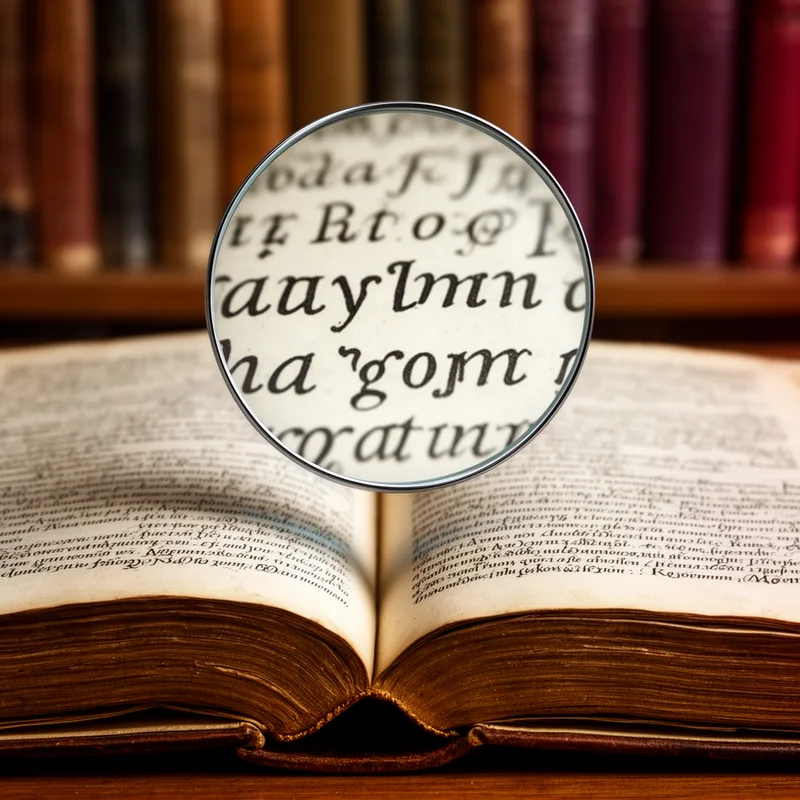
old style
 1
8.6
1
8.6

- noun
- Specialized
- The book was printed in an old style that many found charming and unique.
- old style typefaces
Examples
-
Her design incorporated an old style typeface that reminded readers of classic literature.
-
But this old-style revival was not simply predicated on preserving humanistic values in an increasingly mechanized and utilitarian age.
Academic text (2017) -
And you could still sometimes hear an ardent speech in the old style in the general meeting of the kibbutz.
Fiction book (1993) -
To illustrate the old style, Hailemariam keeps old icons that he uses as models to show artists less common religious themes.
Academic text (2009) -
It powers the radio telescope of the moon, which is listening to the stars, appearing here in their old-style, pre-scientific form.
Academic text (2009) -
Printers using old-style type, on the other hand, had the luxury of setting the text more closely, since these letters' thick lines and natural irregularities permitted the reader to identify words and letters with relative ease.
Academic text (2017) -
A man in a high hat and silver-knobbed cane in the old style, a curious figure who looked as if he had stepped straight out of a story by Gogol, wrote eight numbers in the snow with his cane: the outgoing year and the incoming year.
Fiction book (1993) -
Many artists prefer to use an old style font for their vintage-inspired projects.
Synonyms

A traditional set of printed letters with small slanted ends and mostly even line thickness

A style that looks like it is from earlier times
Antonyms


How Traditional

Surface Forms
Morphology
The phrase 'old style' is transparently composed from 'old' (not new; traditional) + 'style' (manner or design), so a B1 learner who knows both words can infer it means a style that is older or traditional. While the entry refers to a specific typographic category, that technical nuance does not prevent the basic meaning being directly derivable from the constituents.
Etymology
Old style comes from the way printers long ago made letter shapes that looked like handwriting: the letters had small slanted ends and a small difference between thick and thin parts. Because those older shapes felt calm and easy to read, old style now means a 'traditional, readable' font.