

octave
- noun
- /ˈɑːk.teɪv/
- Literature
- Our system of traditional music notation was built upon a scale consisting of seven diatonic tones per octave.
Examples
-
PRE-FORMATTED Table 3 Octave band sound levels for traffic accelerating from a stop light in a small business area on a one-way (four-lane) street.
Academic text (1997) -
Octave Marilly, La Semaine Politique, July 5, 1857, 5.
Academic text (1997) -
Although Jane says, "I am not thinking, at this early stage, of octave-sestet divisions,"
Academic text (2013) -
PRE-FORMATTED Table 2: Octave band sound levels for traffic accelerating from a stop light in a small-business area on a two-way (four-lane) street.
Academic text (1997) -
Octave Marilly wrote in La Semaine Politique in 1857, "The black frock coat and the white cravat render men equal..."
Academic text (1997) -
Meanwhile, a Mississippi mother burns bacon (Blacks 333-39), then in the rhymed octave "The Last Quatrain of the Ballad of Emmett Till" (340).
Academic text (2010) -
In a traditional Petrarchan sonnet, the first part is an octave consisting of eight lines that set up a theme.
-
The poet crafted an octave that beautifully depicted the struggle between light and darkness.
-
Each octave in the poem contributes to the overall narrative, building emotion and imagery.
Synonyms


Compounds
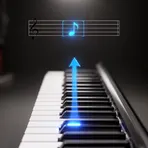
- Specialized
The gap between two notes where the higher sounds like the same note at a higher pitch
Surface Forms
Etymology
Octave comes from the Latin octavus, meaning 'eighth', with the root oct- that you also see in octagon. In poetry an octave is simply a block of eight lines, so the name tells you it is a group of 'eight' lines.