

occiput
 1
9.9
1
9.9

- noun
- /ˈɑk.sɪ.pʌt/
- Specialized
- This increases comfort and reduces pressure over the occiput, jaw, and sternum.
- chin and occiput
Examples
-
Check the chin, ears, occiput, shoulders, sternum, and laryngeal prominence.
Academic text (2002) -
He slips on the shampoo, hits the corner of the step with his occiput.
-
More recently, when the drainage was more bothersome, he would also notice a dull pain at the occiput.
Academic text (2009) -
It is designed to allow for improved fit with individual adjustment possible at the chin, occiput, and sternal areas.
Academic text (2002) -
I feel as ecstatic wide dilation when the shut skull gives up resistance to the healers hands and the occiput opens its bones.
-
For the modified procedure, a headform was used to load the headrests to simulate the loading from the occiput during a collision.
Academic text (1996) -
The contusion on his head has perforated the internal membrane of the occiput and divided that radical small minute invisible nerve which coheres to the pericranium.
Academic text (1990) -
If the patient is complaining of occiput, chin, shoulder, ear, sternum, or laryngeal prominence (Adam's apple) pressure points, do request assistance to change the collar immediately.
Academic text (2002) -
Individuals who are supine in bed for prolonged periods typically break down over the occiput, scapulae, sacrum, and heels; whereas, an individual side-lying will break down over the greater trochanter and the malleoli.
Academic text (1995) -
The doctor examined the patient's occiput for any signs of swelling.
Synonyms
 3
7.4
3
7.4
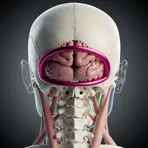
A curved bone at the lower back of the skull that protects the back of the brain
Surface Forms
Etymology
Occiput comes from Latin parts ob- meaning 'behind' and caput meaning 'head'. So it simply means the 'back of the head' and shares the same root as capital, which also comes from 'head'.