
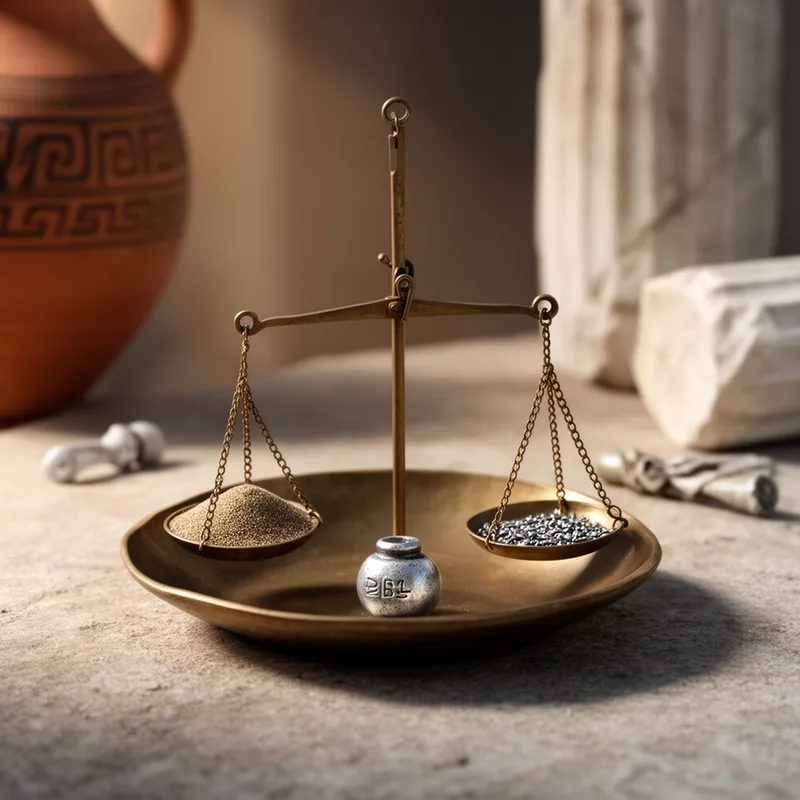
obolus
- noun
- /ˈoʊbələs/
- Archaic
- One obolus was equal to about one tenth of a gram in ancient Greek measurements.
Examples
-
The ancient Greeks catalogued their goods by the weight of an obolus, which was one tenth of a gram.
-
The obolus was used to measure small weights.
-
Archaeologists discovered an obolus among the other artifacts at the excavation site.
-
The ancient Greeks used the obolus as both a coin and a measure of weight.
-
Many ancient texts mention the obolus as a weight unit.
-
Archaeologists found that an obolus weighed significantly less than most modern coins.
-
In ancient trade, a merchant would weigh items using an obolus to ensure fair transactions.
Surface Forms
Etymology
Obolus comes from the Greek word obelos, which meant a 'spit' or small 'metal rod' and is the same root behind obelisk; imagine a tiny metal stick used for measuring. So, because it named a very small piece of metal, obolus became the name for a very small unit of weight.

