
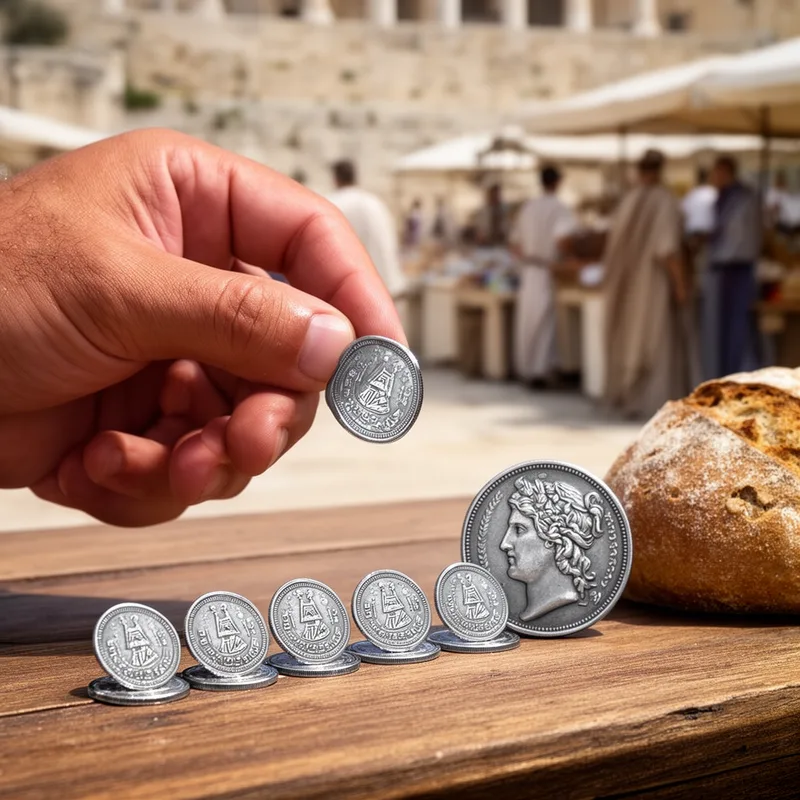
obol


 1
9.9
1
9.9
An ancient Greek money unit equal to one sixth of a drachma
- noun
- /ˈoʊbəl/
- Archaic
:
óbolo
- A single obol was not enough to buy a loaf of bread in the marketplace.
Examples
-
During the excavation, several obols were discovered.
-
The ancient coin collection included a rare silver obol from Athens.
-
Merchants in ancient Greece sometimes accepted payment in obols for small goods.
-
He found an obol in the ancient ruins.
-
In ancient Greece, citizens would often pay for services with obols, as they were a common form of currency.
-
To cross the river Styx in mythology, the deceased needed to offer a obol to Charon for safe passage.
-
During the classical period, a worker might earn just a few obols for a day's labor.
Surface Forms
Etymology
Obol comes from Greek obolos, a 'small metal rod' used as a coin that was worth one-sixth of a drachma, so the word was used as the name of that small unit of currency and weight in ancient Greece.