
nymphic
- adjective
- /ˈnɪmfɪk/
- Specialized
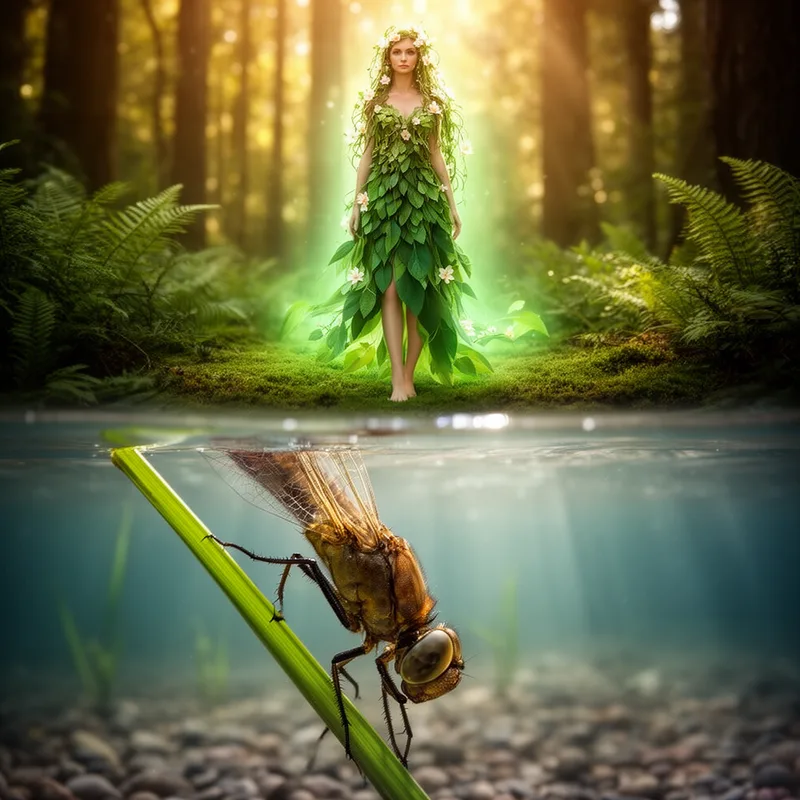
- The dragonfly was in its nymphic form before emerging as an adult.
Examples
-
Scientists observed the nymphic stage of the insect under a microscope.
-
In mythology, certain goddesses are described as having a nymphic beauty.
-
The nymphic qualities of the forest were enchanting.
-
Many ancient myths describe nymphic beings as protectors of nature.
-
The dragonfly was in its nymphic form before emerging as an adult.
-
Scientists observed the nymphic stage of the insect under a microscope.
-
In mythology, certain goddesses are described as having a nymphic beauty.
Synonyms


How Nymphlike


Surface Forms
Morphology
Etymology
Nymphic comes from the word nymph, which first meant a 'young woman' and later a 'nature spirit' in old stories, and the ending -ic means 'relating to'. So, nymphic describes things that are like a nymph or that belong to a young or early stage, for example an insect's nymph stage or a nymph-like beauty.