

nut-leaved screw tree
- noun
- Indian
- The nut-leaved screw tree is popular in gardens because of its bright, attractive flowers.
Examples
-
Her garden features a rare nut-leaved screw tree with unusually dense, hairy leaves.
-
Look at that stunning nut-leaved screw tree in the park!
-
Researchers collected samples from a nut-leaved screw tree growing near the village.
-
The nut-leaved screw tree is known for its vibrant flowers.
-
The nut-leaved screw tree grows beautifully in my mother's garden, showcasing its unique orange-red flowers.
-
In the botanical garden, visitors admire the nut-leaved screw tree for its distinctively hairy leaves and vibrant blooms.
-
A nut-leaved screw tree can often be found in coastal regions of East India, attracting many gardeners with its colorful flowers.
Synonyms
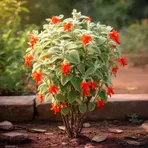
A small bush from India with orange-red flowers and hairy leaves
Surface Forms
Morphology
The phrase is compositionally interpretable: 'nut-leaved' modifies 'screw tree', so a learner who knows the words can infer it refers to a tree/shrub with leaves like a 'nut' plant and that belongs to a group called 'screw tree'. However, 'screw tree' is a specific botanical name and the use of 'screw' in this species name (likely referring to a morphological/spiral feature) is not fully predictable from the everyday noun 'screw', so full meaning requires some prior exposure or domain knowledge.
Etymology
Nut-leaved screw tree may come from two simple images: its leaves look like those of a nut tree (so nut-leaved) and its stems or groups of flowers twist a little like a screw, which gives the 'screw tree' part. So the name describes a small 'shrub' with 'hairy leaves' and bright 'orange-red flowers', and that picture makes the plant easier to remember.

