

nuisance abatement


 1
8.3
1
8.3
- noun
- /ˈnjuːsəns əˈbeɪtmənt/
- Formal
- They also set targets for the use of nuisance abatement laws, which allow a property to be taken from a landlord if police make two drug arrests on a single property within one year.
- nuisance abatement law
Examples
-
The state's nuisance abatement power is no greater than the ability neighboring landowners have to restrain each other's uses or to get court-ordered damages due to the depredations of a neighboring use.
Academic text (1998) -
The nuisance abatement effort resulted in two arrests at the property marked "C" and at the same time brought the owner to housing court.
Academic text (2001) -
If the answer is "yes," it will be important to clarify the board's ability to enforce nuisance abatement authority.
Academic text (1993) -
In the municipal code book in the City Clerk's office are fifteen pages of ordinances about property maintenance, nuisance abatement, clearing the sidewalk, and covering garbage cans.
Fiction book (1992) -
The city implemented a new nuisance abatement policy to address complaints about loud music from local bars.
-
Residents welcomed the nuisance abatement measures that helped reduce the number of abandoned cars on their street.
-
Following multiple complaints, the council approved nuisance abatement actions to remove the overgrown weeds that obstructed the sidewalk.
Synonyms
 11
6.8
11
6.8
A reduction in something harmful or unwanted
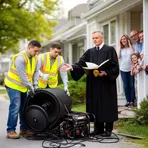
Removal of something that annoys or harms people, ordered by a court
Surface Forms
Morphology
The phrase's meaning is directly compositional: 'nuisance' (a harmful or troublesome condition) combined with 'abatement' (reduction/removal) yields the idea of reducing or removing a nuisance. Although it is a legal term, the sense follows straightforward word composition and would be understandable to a B1 learner who knows both constituent words.
Etymology
Nuisance abatement paints a clear picture: city officials remove or fix something noisy, dangerous, or annoying, the nuisance, by taking it away or making it stop, the abatement part. So it means 'the official removal or stopping of something that causes harm or annoyance, usually by law'.