

nonvolant
- adjective
- /nɒnˈvɒlənt/
- Specialized
- The nonvolant reptiles in the petting zoo fascinated the children, who enjoyed observing their behavior.
Examples
-
Because of the northern flying squirrel's unique mode of locomotion and its constraints, landscapes that are functionally connected for it are also permeable to most (if not all) nonvolant vertebrates in forest communities.
Academic text (2012) -
Whereas the community structure of primates, understory birds, and some insects seems strongly affected by patch size, small nonvolant mammals and some butterflies are apparently more sensitive to the vegetation structure around the forest fragments than to island size.
Academic text (1992) -
Many species of nonvolant birds, such as ostriches and emus, have adapted to life on the ground.
-
In this ecological study, researchers noted that the nonvolant mammals in the area play a crucial role in the ecosystem.
Synonyms
 7
3.9
7
3.9

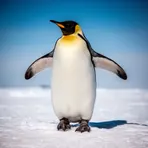
A bird or insect that cannot fly, such as a penguin
Antonyms
How Flightless

Surface Forms
Morphology
Etymology
Nonvolant comes from the prefix non- 'not' and the part volant from Latin volare 'to fly'. You can also see this root in the English word volatile, which originally meant 'able to fly', so nonvolant simply means 'not able to fly'.