
nonpossession
- noun
- /nɒn.pəˈzɛʃ.ən/
- Formal
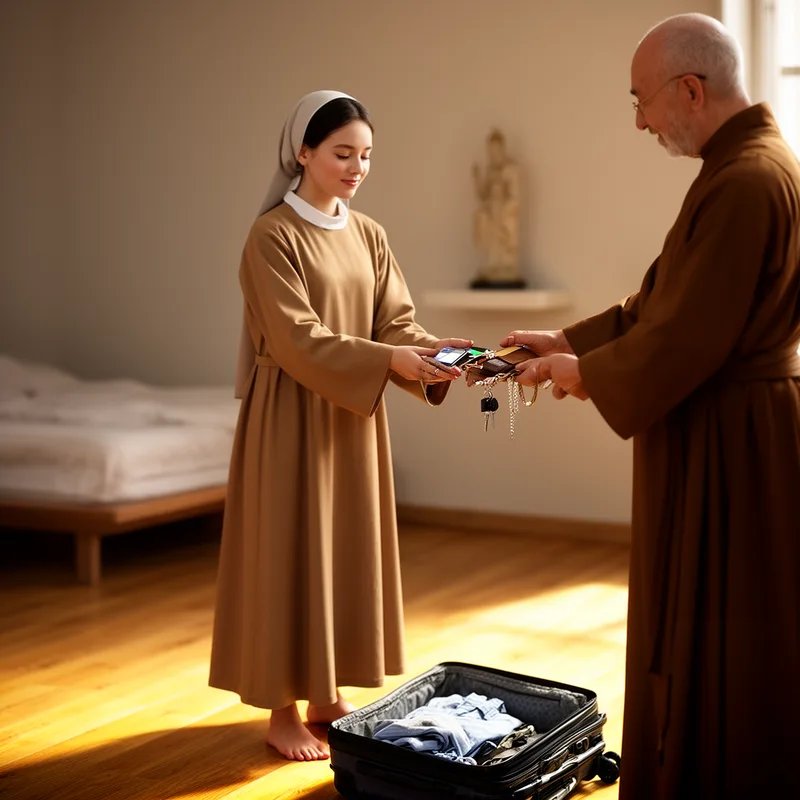
- After her spiritual awakening, she adopted nonpossession and gave away all her belongings.
Examples
-
Many monks practice nonpossession as part of their religious vows.
-
The philosophy of nonpossession encourages people to find happiness without material goods.
-
Many monks practice nonpossession as part of their spiritual journey.
-
The philosophy of nonpossession encourages simplicity in life.
-
After her spiritual awakening, she adopted nonpossession and gave away all her belongings.
-
Many monks practice nonpossession as part of their religious vows.
-
The philosophy of nonpossession encourages people to find happiness without material goods.
Antonyms


How Possessive
 187
2.5
187
2.5
 68
2.8
11
3.5
68
2.8
11
3.5
- Formal
2
8.2
- Formal

 1
5.6
1
5.6
Surface Forms
Morphology
nonpossession = possession (transparent) = non + possession
The negative prefix 'non-' attaches to 'possession' to indicate absence of ownership; the specialized use as a religious/philosophical practice is a straightforward extension of that meaning.
Etymology
The word nonpossession is made of non- ('not') and possession ('owning' or 'having'), the same root as possess. A helpful way to remember the first sense is to think of monks or someone who chooses 'not' to own things for religious or personal reasons, so nonpossession is the practice of living without personal property.