
nonobjectivity
- noun
- /nɒnˌɒbdʒɛkˈtɪvɪti/
- Specialized
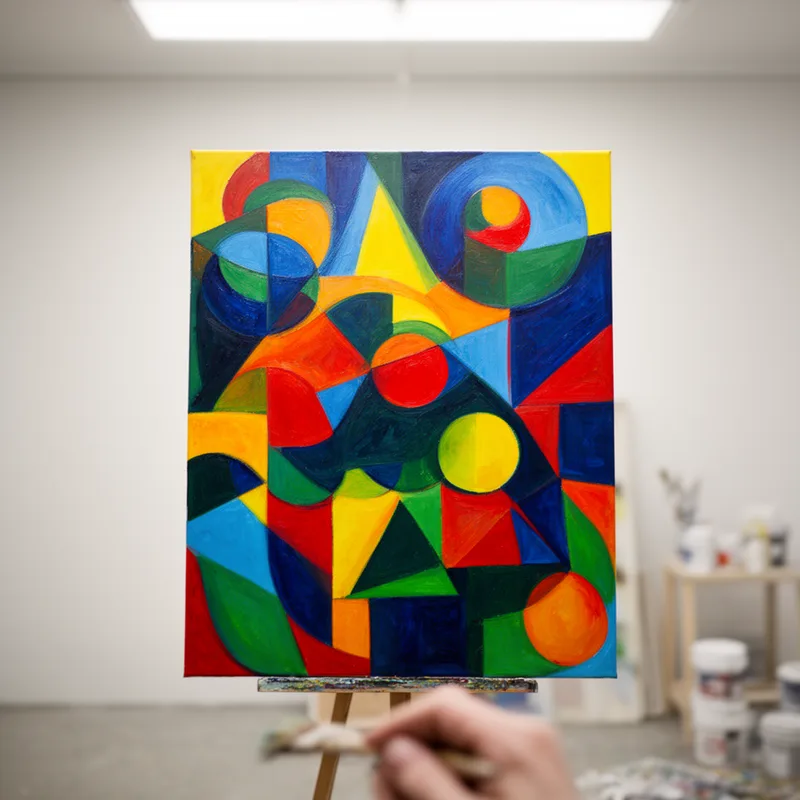
- Many modern artists embrace nonobjectivity to emphasize color and form over recognizable shapes.
- nonobjectivity as Tarabukin
- the nonobjectivity of contemporary art
Examples
-
Such modes of artistic production are, in turn, associated with the critical work of the literary formalists: "Nonobjectivity in painting is ... a method of 'laying bare the device,' to use the term of the 'OPOIAZists'" (OM, pp. 33-34). (n45)
Academic text (2000) -
On the face of it, nonobjectivity would seem to have little to do with the Productivist platform, insofar as the latter was most typically understood as an exhortation to the production of utilitarian objects.
Academic text (2000) -
Nonobjectivity: Urphanomen of Contemporary Culture
Academic text (2000) -
These are the contemporary historical conditions for which nonobjectivity is, the critic suggests, the Urphanomen.
Academic text (2000) -
Given that Spengler does not himself connect his reflections on economy with recent artistic practice, how does Tarabukin defend his claim that the German writer has demonstrated the ways in which nonobjective forms of art have revealed the nonobjectivity of contemporary culture?
Academic text (2000) -
What was the theoretical efficacy of Tarabukin's emphasis on nonobjectivity vis-à-vis his formulation of Productivism in From Easel to Machine?
Academic text (2000) -
In positing nonobjectivity as Urphanomen, Tarabukin draws upon another fundamental opposition within The Decline: the antithesis of concrete experience (which marks culture) and abstract thinking (which characterizes civilization).
Academic text (2000) -
The gallery featured a collection that highlighted nonobjectivity, showcasing works that did not represent any specific objects.
-
In her abstract paintings, the focus on nonobjectivity allows viewers to interpret the colors and shapes in their own unique ways.
Synonyms

 6
8.0
6
8.0

A painting that uses shapes and colors instead of realistic pictures
 3
3.9
3
3.9
Work made with shapes and colors that does not show real things

An art movement that uses shapes, colors, and forms instead of real objects to show ideas or feelings

An art or writing style that avoids realistic images and uses imagination
How Abstract

Surface Forms
Morphology
nonobjectivity = nonobjective (semi-transparent) = non + object + ive + ity
Formed regularly by adding '-ity' to 'nonobjective', but the art-specific sense of 'nonobjective' (meaning abstract, not representing objects) is specialized and may not be fully guessable to average learners.
Etymology
The word nonobjectivity comes from non- meaning 'not' and object meaning 'thing'. So in art it means 'not showing things' and instead using shapes, color, and form to express ideas.