

nonidentity
- noun
- /ˌnɒn.aɪˈdɛntɪti/
- The artist explored nonidentity by contrasting various styles and techniques in her work.
Examples
-
The study highlighted nonidentity as a crucial factor in understanding the relationship between different cultures.
-
Asked about the elaborate technique directed at avoiding first-person narration of the obviously autobiographical, Christa Wolf describes her sense of alienation from her former self, a nonidentity that could be expressed only through the use of the third person.
Academic text (1992) -
Yet this nonidentity belongs to what the church is and how Christians exist.
Academic text (2008) -
The account of Pentecost in Acts 2 cues theology on the meaning of the difference, the nonidentity, in missions.
Academic text (2008) -
This is the otherness and nonidentity that makes the painting into a privileged aesthetic object in Gates's hands, into truly private property.
Academic text (2002) -
What Reinhardt stages is an artful ruse, his moving from identity toward nonidentity.
Academic text (2014) -
This is the paradoxical passage by which the newness of nonidentity emerges from the regiment of identity.
Academic text (2014) -
He recognizes three possible relationships: identity, similarity-in-difference, or pure nonidentity. But he offers no guidelines as to how that conversation is to be conducted and how it is to progress.
Academic text (1991) -
It is precisely Reinhardt's famous tautology, art-as-art, that both states an identity and frames an experience of nonidentity.
Academic text (2014) -
It is this relationship of nonidentity, somewhere between parasitic and symbiotic, which Beckett and Nauman force their characters to endure with every recurrence?
Academic text (1998)
Synonyms

 3
4.5
3
4.5

A state when two things or people are not alike


 1
6.3
1
6.3
The fact that two things are not the same
 1
5.6
1
5.6
Being clearly different from others

A clear difference between two or more things

A difference that shows two or more things are not the same
How easy it is to see that something is different from others

A big difference between things that are not similar
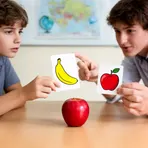
A situation where two things are not the same or cannot replace each other

A situation where something cannot be exchanged for something else
How Different

Surface Forms
Morphology
Etymology
Nonidentity begins with non- meaning 'not' and ends with identity, which means 'sameness' or 'who someone is' and is the same root you see in identical. So nonidentity simply means being 'not the same', a clear way to remember it is that it points to a difference between two things.