
nondominant
- adjective
- /ˌnɒnˈdɒmɪnənt/
- Specialized
- Using your nondominant hand in sports can enhance coordination and balance.
- nondominant hand
- nondominant brain
- nondominant side
Examples
-
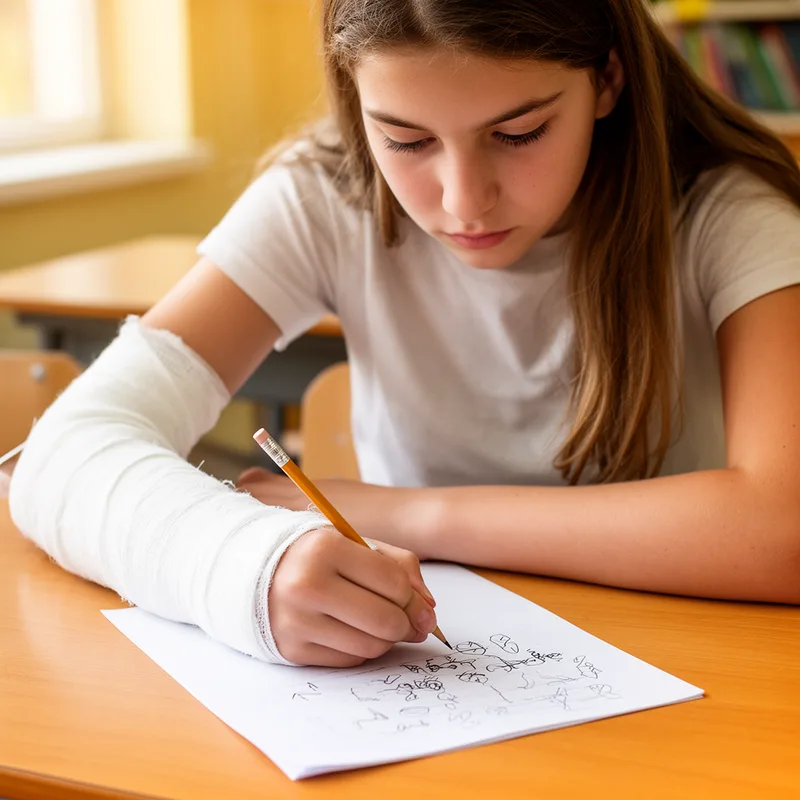
To improve dexterity, practice writing with your nondominant hand for a few minutes each day.
-
To complete this task, participants held the vibrating device in their nondominant hand and placed their hand in a box that contained sound-attenuating padding on the inside.
Academic text (2011) -
An adjustment of 6% between the force of the dominant and nondominant side was made.
Academic text (2017) -
The three performers were required to use the nondominant hand or foot and to demonstrate at least one error.
Academic text (1997) -
The same approach was used for the matched pairs defined by the dominant and nondominant hands.
Academic text (2008) -
Begin practicing new skills with the dominant hand/foot and then move to the nondominant side.
Academic text (2012) -
The instruction is assumed to involve dominant brain controls, while the music relates to nondominant brain control.
Academic text (1990) -
By requiring the children to put their canes in their nondominant hands, I had hoped to force concentration and attention to the skill, knowing that the bilateral transfer process would overflow to the dominant hand.
Academic text (2000) -
Peripheral quantitative computed tomography (pQCT) was performed in a subset of 62 women at the ultradistal radius of the nondominant forearm.
Academic text (2004) -
When drawing, many artists recommend trying with your nondominant hand to develop new skills.
Antonyms


How Dominant
- Specialized

 7
7.5
7
7.5
Surface Forms
Morphology
Etymology
The word nondominant joins non- 'not' and dominant 'main or strongest', so it means the side of the body or brain that is 'not the main one' and is used less.