

nonconscious
- adjective
- /nɒnˈkɒnʃəs/
- Specialized
- The terms implicit or explicit, declarative or nondeclarative, and conscious or nonconscious have all been used as descriptive terms for this main separation of memory systems.
- conscious and nonconscious
Examples
-
Viewing mental experiences as self-monitoring events helps us initiate some hypotheses about why consciousness would have evolutionary survival advantages over a nonconscious brain.
Academic text (1998) -
He seemed basically permanently nonconscious.
Blog text (14) -
Throughout this process, I was not thinking as a music educator but instead was working at a nonconscious level of response.
Academic text (1993) -
Grouping memory systems by the conscious or nonconscious processes seems to map well with physiological findings.
Academic text (1997) -
Brain laterality determines that the dominant brain has control over conscious areas, and the non-dominant brain over the nonconscious functioning.
Academic text (1990) -
Positron Emission Tomography (PET) studies have also revealed physiological evidence for the conscious and nonconscious distinction in memory.
Academic text (1997) -
During sleep, many mental processes continue to operate on a nonconscious level, influencing our thoughts and behaviors.
-
Some decisions are made at a nonconscious level, allowing us to react quickly without needing to think consciously.
-
Research indicates that nonconscious cues can significantly impact our emotional responses and decision-making.
Synonyms

 108
4.1
108
4.1

Not aware of what you do or not acting on purpose
 42
6.1
42
6.1
Thoughts or feelings you are not fully aware of that influence what you do
Antonyms

How Conscious

Surface Forms
Morphology
Etymology
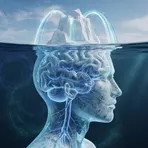
Nonconscious comes from the parts non- 'not' and conscious 'aware', so it means 'not in awareness'. A helpful image is a backstage worker you do not see — the hidden mental actions are nonconscious because they work without you knowing.