
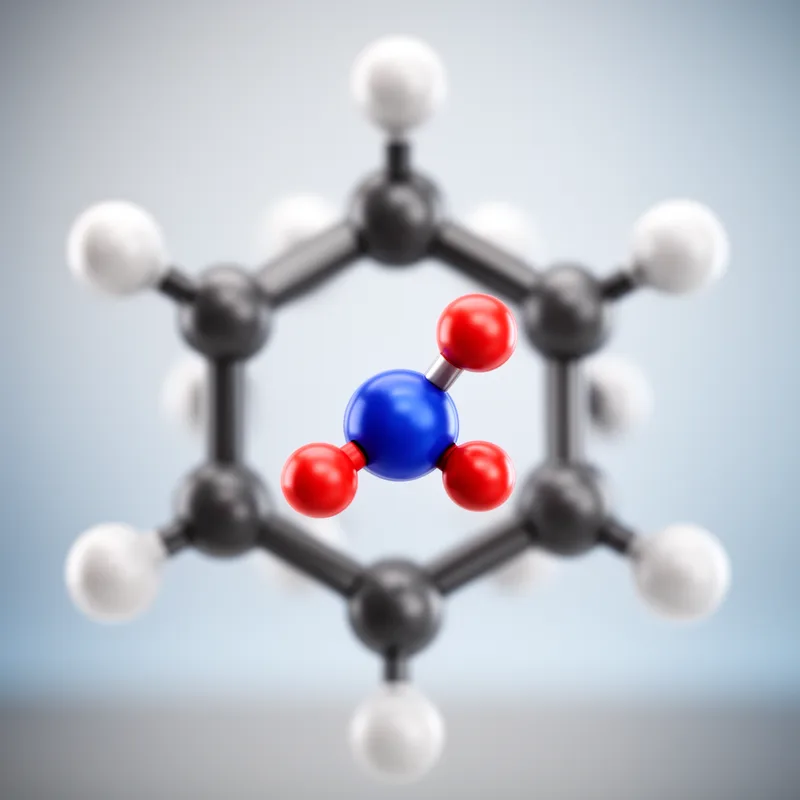
nitro group
- noun
- /ˈnaɪtroʊ ɡruːp/
- Specialized
- The explosive power of TNT comes from its three nitro groups.
Examples
-
Chemists often study how a nitro group affects the properties of different compounds.
-
A nitro group is often found in many organic compounds used in industry.
-
The presence of a nitro group can enhance the reactivity of aromatic rings.
-
The nitro group is essential in organic chemistry.
-
Many explosives contain a nitro group.
-
A nitro group is a common feature in fertilizers that help plants grow efficiently.
-
The chemical structure of glycerin includes a nitro group that increases its effectiveness as an explosive.
Surface Forms
Morphology
The noun phrase is a direct modifier+noun composition: 'nitro' names the nitro functional substituent and 'group' denotes a bonded assembly of atoms, so a learner who knows both words can infer it refers to the nitro functional group in chemistry. Although technical vocabulary, the meaning is compositional and follows standard morphological patterns (and similar labels exist in other languages), making it immediately understandable to someone who knows the constituents.
Etymology
The term nitro group comes from the word 'nitro', once used for salts that made early explosives. It is literally a nitrogen atom with three oxygen atoms attached, and because that small cluster makes a molecule much more likely to react or explode, chemists call that part a nitro group.

