
nibbana
 1
9.9
1
9.9

- noun
- /nɪˈbɑːnə/
- Specialized
- The "experience" of nibbana (Sanskrit: nirvana) provides the final, liberating insight into the nature of all phenomena.
Examples
-
Achieving nibbana is considered the final release from the cycle of rebirth in Buddhist teachings.
-
"Nibbana is supreme," say the Buddhas.
Blog text (10) -
This state marks the attainment of Nibbana.
Academic text (1990) -
More specifically, states of ecstasy involve an apparent loss of physical and mental control, and are perceived as qualitatively different from states cultivated through quiet meditation for the purpose of realizing nibbana.
Academic text (1997) -
In Buddhism, nibbana represents the ultimate state of perfect peace and freedom from suffering.
-
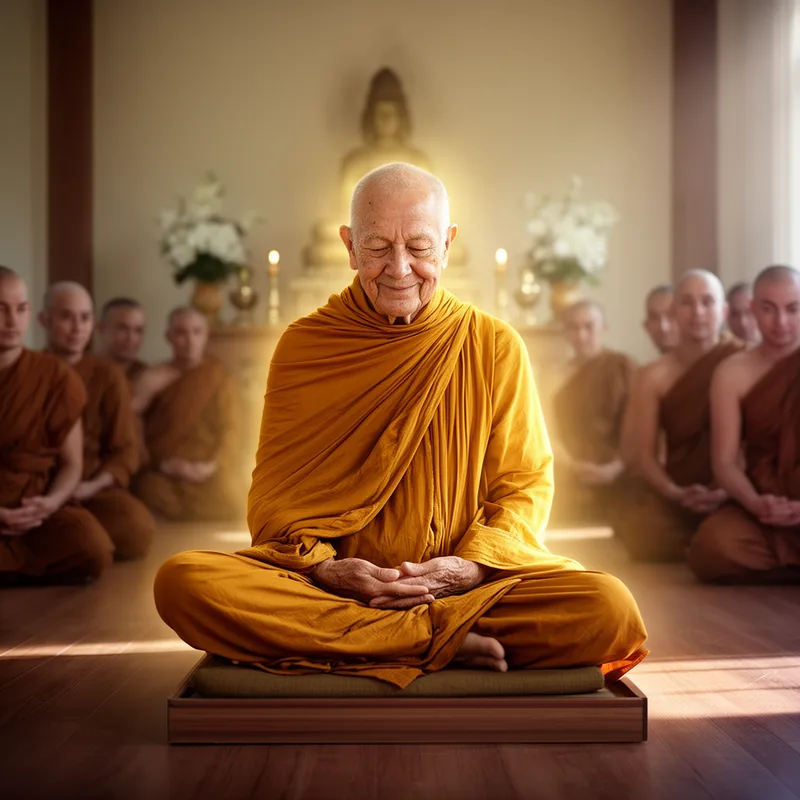
The monk dedicated his life to meditation, striving for the enlightenment that leads to nibbana.
Synonyms
 15
9.3
15
9.3
A spiritual state in Buddhism and Hinduism of perfect peace and freedom from rebirth and suffering
Surface Forms
Etymology
Nibbana comes from an old Pali and Sanskrit word nibbāna/nirvāṇa that means 'to blow out' or 'extinguish', like blowing out a candle. So nibbana in Buddhism is the 'blowing out' of desire and suffering, leaving perfect peace and the final release from rebirth.