
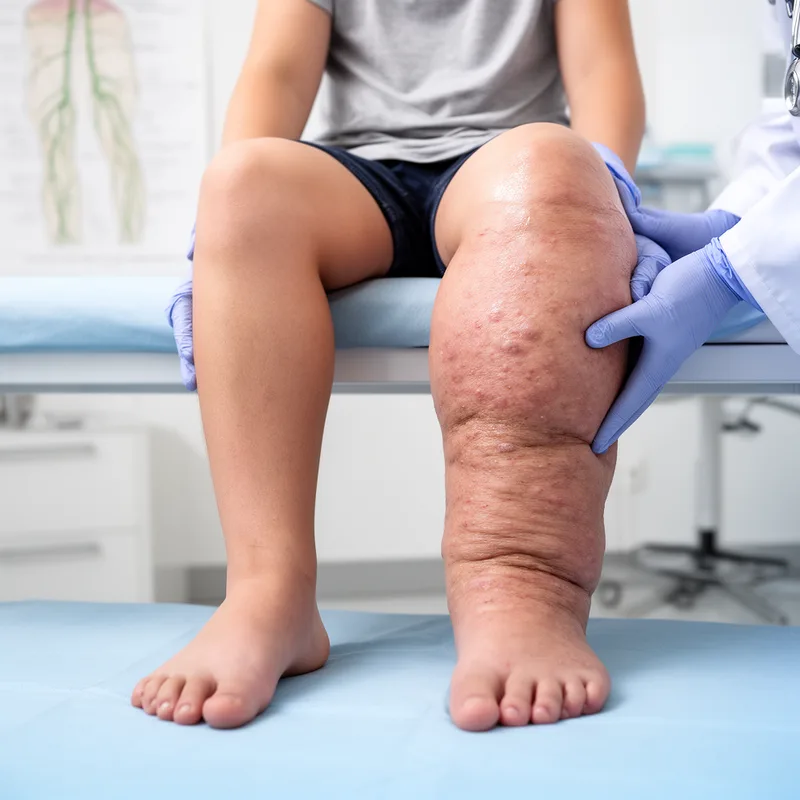
nevoid elephantiasis
- noun
- /ˈnivoʊɪd ˌɛlɪfəˈnaɪtɪs/
- Specialized
- The patient was diagnosed with nevoid elephantiasis after exhibiting unilateral thickening of the skin on his right leg.
Examples
-
The patient was diagnosed with nevoid elephantiasis after exhibiting unilateral swelling of the lower leg.
-
Surgical intervention may be required to manage advanced cases of nevoid elephantiasis.
-
Congenital lymph vessel malformation is the primary cause of nevoid elephantiasis in affected individuals.
-
The patient was diagnosed with nevoid elephantiasis at a young age.
-
He has suffered from nevoid elephantiasis for most of his life.
-
Congenital nevoid elephantiasis can lead to noticeable changes in the appearance of the affected extremity.
-
Surgical treatment can help alleviate symptoms associated with nevoid elephantiasis in severe cases.
Synonyms
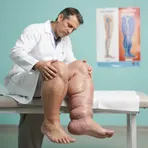
 1
9.9
1
9.9

A disease that makes legs or private parts very large and thick because body fluid cannot drain

An area of skin that becomes very thick and swollen because lymph vessels are blocked
Antonyms

Surface Forms
Morphology
The compound is directly compositional: 'nevoid' means nevus-like (relating to a birthmark) and 'elephantiasis' denotes swelling from lymphatic obstruction, so the phrase denotes a form of elephantiasis with nevus-like skin changes. The adjective+noun composition follows standard English patterns and would be predictable to a learner who already knows both constituent meanings.
Etymology
Nevoid elephantiasis combines nevoid (a patch like a birthmark) and elephantiasis (thick, elephant-like skin), so the name gives a clear image. Imagine someone born with one arm or leg thick and heavy like an elephant's because small tubes that carry fluid are blocked; that's why the term means a swelling and skin thickening on one side from birth.