
neutropenia
- noun
- /ˌnjuːtrəˈpiːniə/
- Specialized
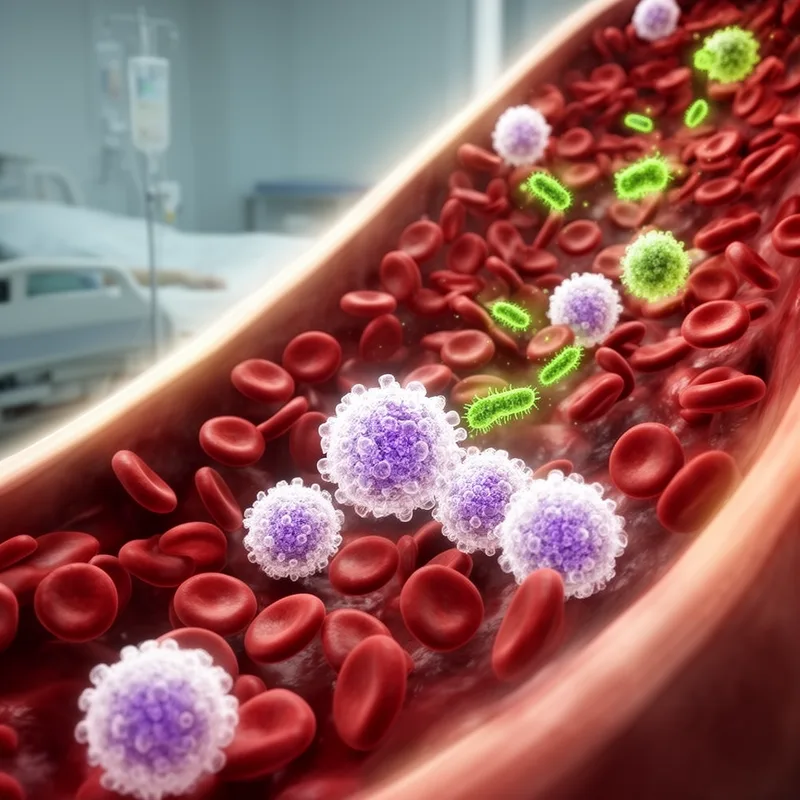
- Neutropenia is diagnosed when a patient's neutrophil count falls below the normal range, indicating a potential risk for serious infections.
- prolonged neutropenia
- patients with neutropenia
Examples
-
Neutropenia was defined as an absolute neutrophil count <1,000/mm3 at least once during the hospital stay.
Academic text (2007) -
With clozapine, routine monitoring is required prior to and throughout treatment because of the risk of neutropenia and agranulocytosis.
Academic text (2012) -
Neutropenia has been reported in up to 50% of patients with AIDS and Aspergillosis.
Academic text (2007) -
Persistent neutropenia resulted in death in two of our cases (67%).
Academic text (1995) -
Prolonged neutropenia, severe facial pain, and facial edema were present in all cases.
Academic text (1995) -
Neutropenia was the only statistically significant difference found between patients with and without pulmonary mycosis.
Academic text (2007) -
Neutropenia was seen in 41% of the patients with fungal pneumonia compared with 15% in the non-fungal pneumonia group.
Academic text (2007) -
One sibling developed neutropenia, autoimmune hemolytic anemia, and severe recurrent thrombocytopenia.
Academic text (2000) -
Partial response was achieved with Gemcitabine (Gemzar), but when the dosage was lowered secondary to grade III neutropenia, the patient's disease subsequently progressed.
Academic text (2007) -
Review of laboratory data and use of antibiotics and steroids showed that neutropenia was statistically more common in patients with fungal than non-fungal pneumonia (Table 1).
Academic text (2007)
Compounds

- Specialized
A rare blood disorder causing regular drops in neutrophils, a type of white blood cell
How Severe
- Specialized
 1
9.9
1
9.9


- Specialized
Surface Forms
Morphology
neutropenia = neutrophil (semi-transparent) = neutro + penia
Formed from the combining form neutro- (relating to neutrophils) plus the medical suffix -penia meaning 'deficiency', so the medical meaning is derivable though both parts are technical.
Etymology
Neutropenia breaks into neutro- and -penia. The part neutro- comes from neutral, meaning 'in the middle', a name given to a common white blood cell because of how it looks in lab tests, and -penia means 'lack' or 'too few'. So neutropenia means a 'lack of neutrophils', which explains why it describes a low number of these infection-fighting white blood cells.