
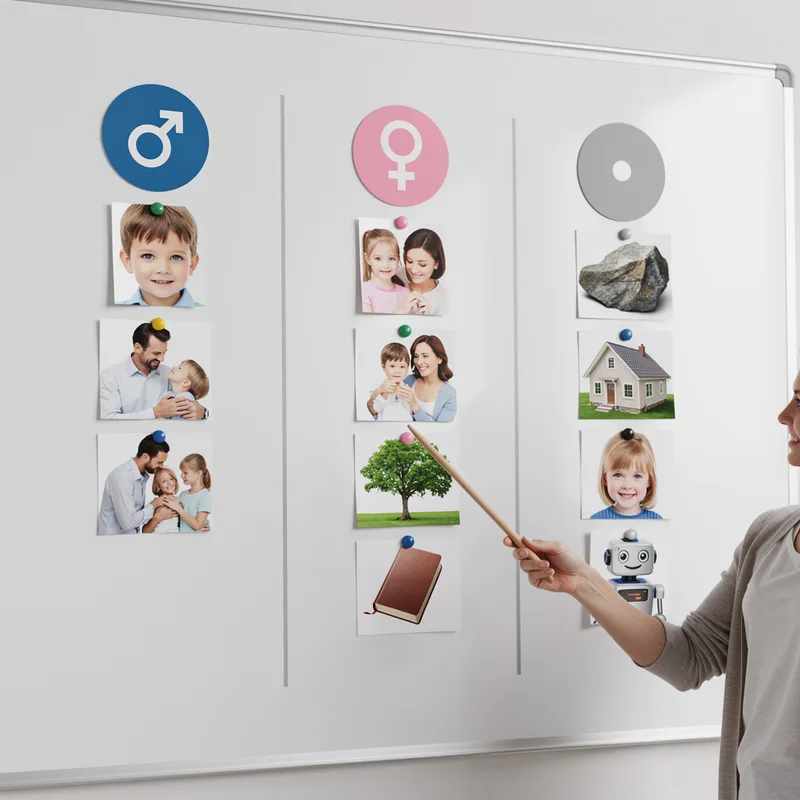
neuter
 6
7.8
6
7.8

- noun
- /ˈnjuːtər/
- Specialized
- The Spirit, who is masculine in Latin, neuter in Greek, and feminine in the Semitic languages, blurs gender questions.
Examples
-
Look at English literature more than about 50 years old, and you'll see the neuter pronoun commonly used for a child.
Blog text (15) -
We might have called this creature of neuter gender simply a human being, as we might call a woman a human being.
Fiction book (2002) -
Its is the neuter version of his and her.
Blog text (1) -
Vice is a common substantive of the neuter gender, the third person, in the singular number, and the nominative case.
Academic text (1998) -
Now, one thing to note is that neuter plural nouns very often look the same as neuter singular nouns.
-
As his series of ten or so articles proves, the masculine and neuter arose before the feminine; the latter is a third gender, a historical afterthought.
Fiction book (1991) -
Its Zambinellian descendence means that the Barthesian neuter can never exactly be ungendered or unsexed.
Academic text (1992) -
Such statements betray an implicit and untenable body-self dualism, as if the human person were a neuter self inhabiting a body that happens to be male or female.
Academic text (2008) -
In English grammar, words like 'book' or 'water' are categorized as neuter nouns, as they are not associated with a specific gender.
-
The neuter form of the pronoun is commonly used to refer to inanimate objects, such as 'it' for 'the table'.
Synonyms

A gender in grammar for words that are neither masculine nor feminine
Surface Forms
Etymology
Neuter as a noun takes its name from Latin ne- 'not' and uter 'which of two', meaning 'neither of the two', so the neuter is the gender class used for things that are neither masculine nor feminine.