
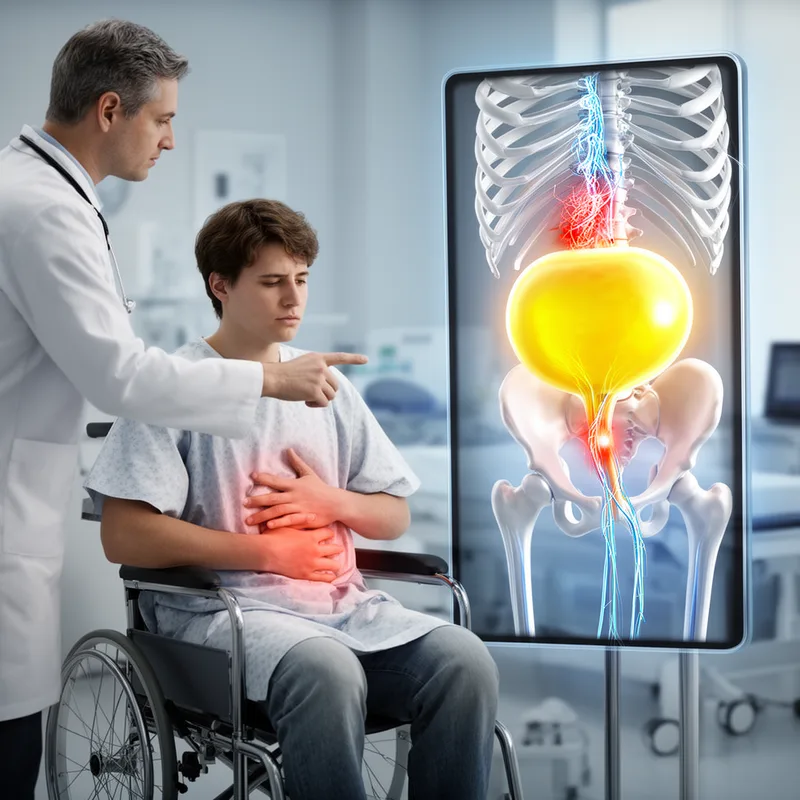
neurogenic bladder


 1
7.7
1
7.7
- noun
- /ˌnjʊəroʊˈdʒɛnɪk ˈblædər/
- Specialized
- Treatment for neurogenic bladder often includes medication and specialized bladder training.
Examples
-
The doctor diagnosed her with neurogenic bladder after she experienced frequent urinary retention.
-
People with spinal cord injuries are at increased risk of developing neurogenic bladder.
-
A neurogenic bladder can lead to serious complications.
-
Patients with a neurogenic bladder often experience incontinence.
-
The doctor explained that my condition, a neurogenic bladder, affects how I urinate.
-
After my surgery, I experienced difficulties due to a neurogenic bladder that impaired my bladder control.
-
Patients with a neurogenic bladder often require specialized treatment to manage their symptoms.
Surface Forms
Morphology
The compound is directly compositional: 'neurogenic' means originating from the nervous system and 'bladder' is the organ that stores urine, so the phrase denotes a bladder problem caused by nerve-related dysfunction. This formation follows regular medical compounding patterns (nerve-related + organ) and is cross-linguistically transparent, so a learner who knows both constituents can infer the meaning.
Etymology
The noun neurogenic bladder comes from the simple idea of a bladder problem 'caused by' the 'nerves'. The parts neuro- means 'nerve' and -genic means 'caused by', so the phrase reminds you that if the nerves cannot send messages, the bladder cannot work well and that's why it means trouble with 'urination'.