
neuroepithelium


 1
9.9
- noun
- /ˌnʊroʊˈɛpɪˌθiliəm/
- Specialized
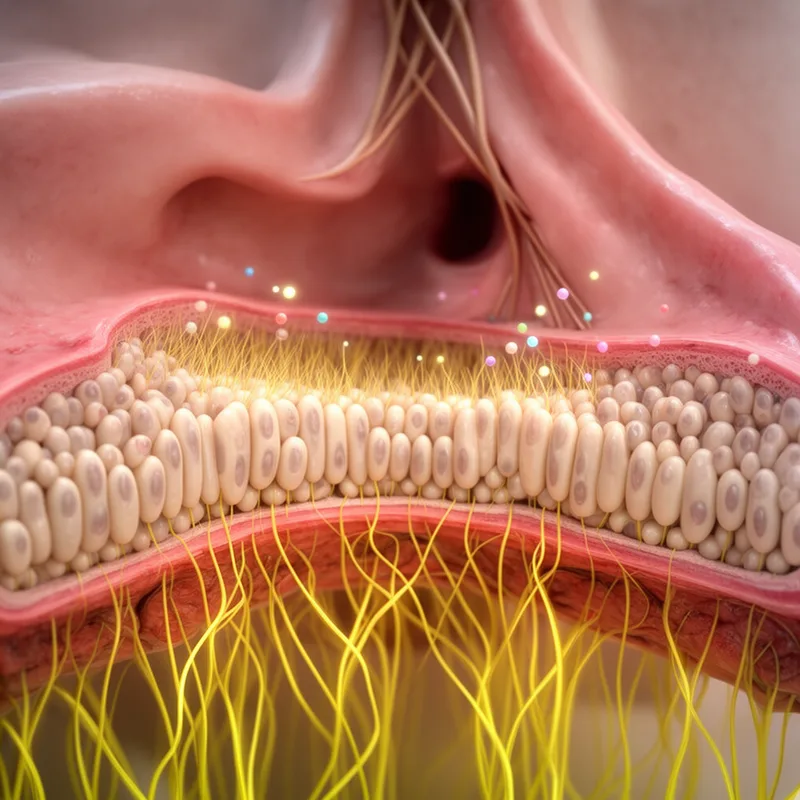
- The olfactory neuroepithelium is responsible for detecting odors in the nasal cavity.
Examples
-
Damage to the neuroepithelium can impair a person’s sense of taste or smell.
-
Researchers examined the neuroepithelium under a microscope to study its cellular structure.
-
The neuroepithelium plays a crucial role in sensory perception.
-
In the olfactory system, the neuroepithelium contains sensory receptors.
-
The olfactory neuroepithelium is responsible for detecting odors in the nasal cavity.
-
Damage to the neuroepithelium can impair a person's sense of taste or smell.
-
In the olfactory system, the neuroepithelium contains sensory receptors.
Surface Forms
Morphology
neuroepithelium = epithelium (semi-transparent) = neuro + epithelium
The meaning is fairly clear from 'neuro-' plus 'epithelium', but the term is technical and not fully guessable for an average B1 learner.
Etymology
Neuroepithelium combines neuro- ('nerve') and epithelium ('surface lining', like the outer layer of the skin). So it names a thin lining that has nerve or sense cells, which is why it helps detect things such as smells and tastes.