
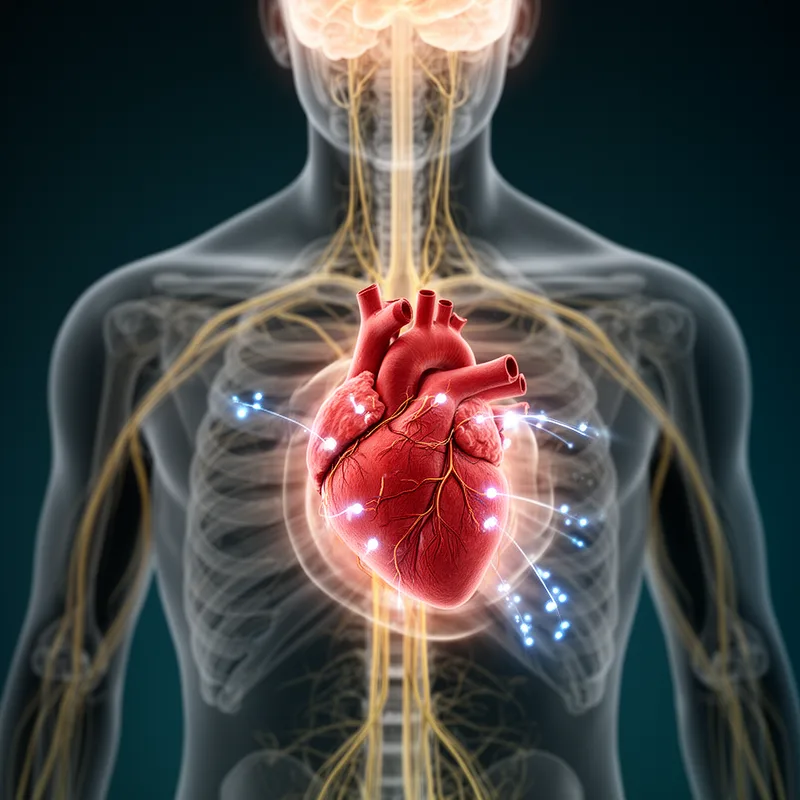
neurocardiac
- adjective
- /ˌnjʊərəʊˈkɑːrdiæk/
- Specialized
- Researchers are studying how neurocardiac interactions affect heart health during stressful situations.
Examples
-
These alternative mechanisms likely involve the neurocardiac axis triggered by a stress response or catastrophic neurologic injury.
Academic text (2016) -
This neurocardiac axis was first characterized in 1971 by Engel et al., who described unexplained deaths that derived from cardiac irregularity and acute heart failure triggered by psychological factors and surging of the sympathetic-adrenal system.
Academic text (2016) -
These findings provide evidence that other variables (i.e., preexisting hypertension and decreased reactive oxygen products) besides increased intracranial pressure may also play a role in neurocardiac changes associated with SAH.
Academic text (2016) -
The doctor explained that stress can lead to significant neurocardiac effects, impacting the patient's heart rate.
-
After the accident, the patient's neurocardiac response caused fluctuations in his heart rhythm.
Synonyms
Relating to the body's nerves and blood flow
Surface Forms
Morphology
neurocardiac = cardiac (semi-transparent) = neuro + cardi + ac
The word is built transparently from the technical combining form neuro- and the adjective cardiac, but the medical register may make it less immediately obvious to average learners.
Etymology
Neurocardiac breaks into neuro- meaning 'nerve' and cardiac meaning 'heart', and you can see cardiac in the common word 'cardio' for heart exercise. So, neurocardiac describes the connection where nerve messages affect the heart, which is why doctors use it for responses or disorders that involve both.

