
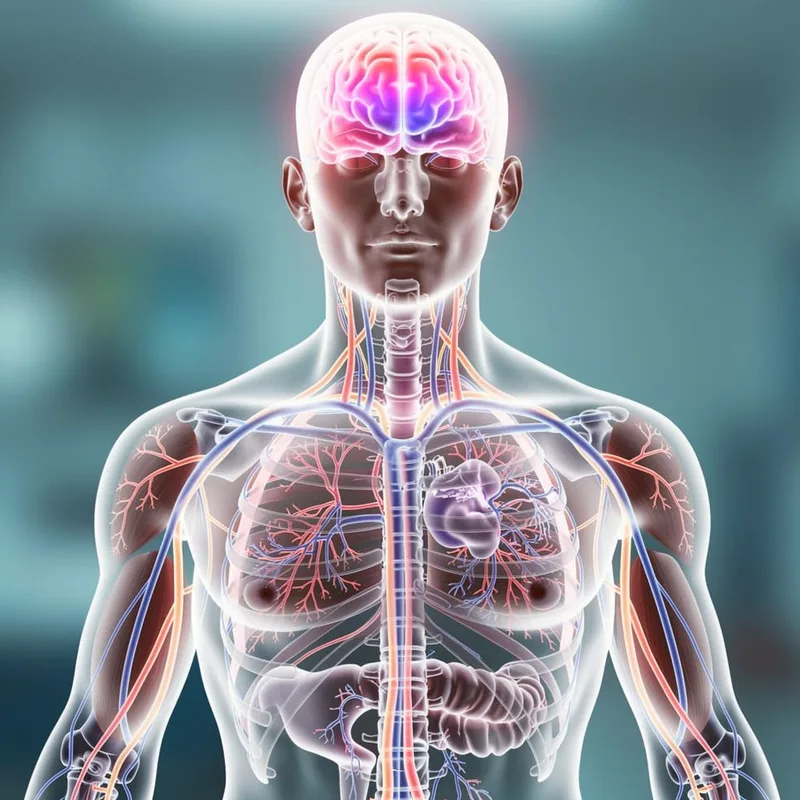
neurobiological
 2
7.1

- adjective
- /ˌnjʊəroʊˌbaɪəˈlɒdʒɪkəl/
- Specialized
- Dyslexia is a specific learning disability that is neurobiological in origin.
- neurobiological basis
- neurobiological research
- neurobiological processes
Loading YouTube…
Watch on YouTubeAnd that truth that epigenetics and, and epigenetics through the neurobiological lens tells us that's true.
- And that truth that epigenetics and, and epigenetics through the neurobiological lens tells us that's true.
- Here is a very quick inventory of our of, I think, the kinds of neurobiological motives for violence.
- This surge can actually be coherent and well organized and it's being explored as a neurobiological basis for the near death experience.
- Like we, we can get to the point of that neurobiological state, but it arises often from a psychological dilemma.
- You take over this neurobiological system and you create almost certainty that you will complete the process to the end goal perfectly.
- It's that's what you're saying is a is grounded in real neuro neurobiological data.
Examples
-
While the present findings from cognitive neuroscience are certainly provocative, our current understanding of the neurobiological bases of mathematical ability remains in its infancy.
Academic text (2008) -
First, we need to update the story on what we do and do not know about giftedness from a neurobiological point of view.
Academic text (2008) -
Both are functions of neurobiological processes.
Academic text (1998) -
His proposed neurobiological perspective of motion in music deserves further empirical treatment.
Academic text (2012) -
Neurobiological evidence illustrates that learning begins at birth and continues at an accelerated rate until about thirteen.
Academic text (1992) -
ADHD is a chronic neurobiological disorder which affects the brain structural and chemical capabilities.
-
The hippocampal formation is an integral component of the neurobiological circuitry underlying behavioral plasticity.
Academic text (1993) -
At birth, infants possess a neurobiological repertoire of abilities for sensory discriminations and associations (Gardner, 1991).
Academic text (1992) -
Recent research has shown that neurobiological factors significantly influence mental health disorders.
-
Understanding neurobiological processes can help in developing treatments for nerve-related diseases.
Synonyms
 141
4.9
Connected with the nerves or the nervous system
 82
6.3
Relating to the brain, spinal cord, or nerves
 8
7.0
Having to do with nerve cells and the nervous system
 7
6.6
Relating to the nervous system, especially the brain and spinal cord
 1
8.3
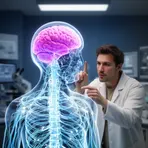
About how the nerves and brain work in the body
 1
6.3
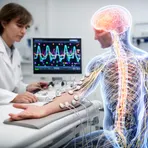
About how the brain and nerves work

 1
8.6
Relating to how the nervous system works
Surface Forms
Morphology
neurobiological = biological (semi-transparent) = neuro + biolog + ical
The adjective is formed by standard prefixation to 'biological'; the structural relation is clear.
Etymology
Neurobiological comes from the parts neuro- meaning 'nerve' and bio- meaning 'life', the same pieces you see in neuron and biology. So, neurobiological points to the 'living' side of nerves and the brain and means the biological study or body processes of the nervous system.