
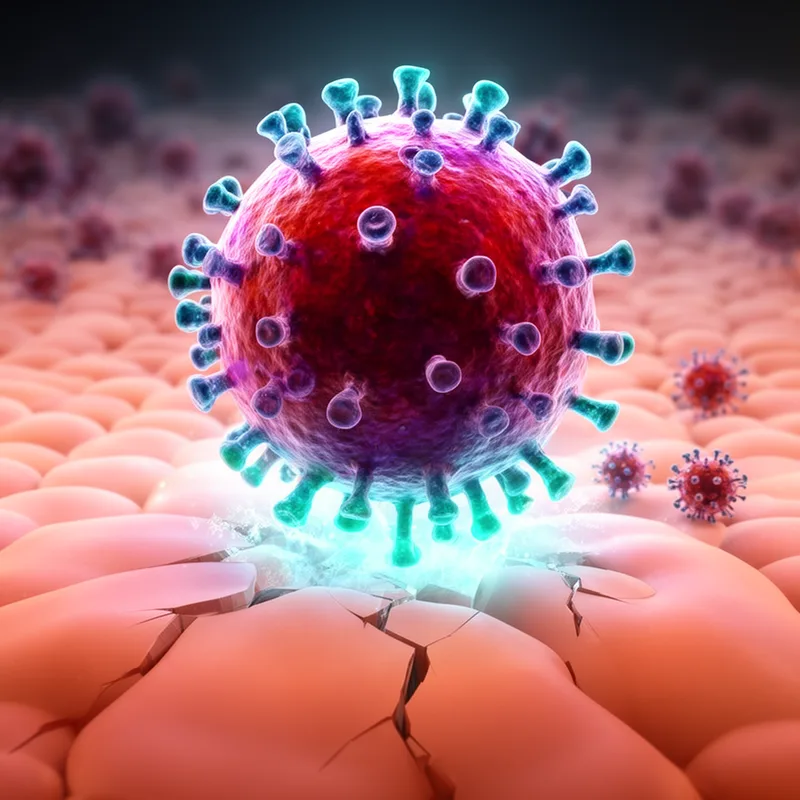
neuraminidase


 1
9.9
- noun
- /ˌnjʊərəˈmɪnɪdeɪz/
- Specialized
- All viral samples were collected before the initiation of neuraminidase inhibitors (NAIs).
- neuraminidase inhibitors
- neuraminidase gene
Examples
-
The mystery virus is H5N1, short for hemagglutinin subtype 5 and neuraminidase subtype 1, both proteins on the virus surface.
Academic text (1998) -
Information about the use of immunosuppressant and antimicrobial drugs and neuraminidase inhibitors was obtained from the Drug Program Information Network, the comprehensive database of all out-of-hospital prescriptions dispensed in Manitoba.
Academic text (2012) -
There are two glycoproteins, haemagglutinin (HA) and neuraminidase (NA), on the surface of the virus.
Academic text (2012) -
Oseltamivir (Tamiflu) blocks the neuraminidase protein of the virus, stopping its spread from one cell to another.
Blog text (29) -
It's called Zadimovir, and it's an antiviral that binds to the neuraminidase protein of the influenza virus.
-
In healthy adults, what are the benefits and harms of neuraminidase inhibitors (NIs) for prevention or treatment of influenza?
Academic text (2014) -
The emergence of resistance to neuraminidase inhibitors could potentially have dramatic consequences because they are the first-line response to pandemics caused by highly virulent influenza viruses.
Academic text (2014) -
Of 25 clade 1.1 viruses, all possessed a marker of resistance to M2 blockers amantadine and rimantadine; 24 were inhibited by neuraminidase inhibitors.
Academic text (2013) -
One clade 1.1 virus contained the R430W neuraminidase gene and reduced inhibition by oseltamivir, zanamivir, and laninamivir 12-, 73-, and 29-fold, respectively.
Academic text (2013) -
Researchers found that the neuraminidase enzyme allows the flu virus to efficiently spread between cells in the human body.
Surface Forms
Morphology
neuraminidase = neuraminic (semi-transparent) = neuraminic + ase
Built from the specialised chemical name 'neuraminic' plus the enzyme-forming suffix '-ase'; '-ase' signals an enzyme but the root is a technical term unfamiliar to most learners.
Etymology
Neuraminidase comes from the name neuraminic, built from parts meaning 'nerve' and 'amino', and the ending -ase, which means 'enzyme' like in lactase. So neuraminidase is an enzyme that 'breaks down' parts of body cells, and that ability is what helps some viruses spread.