
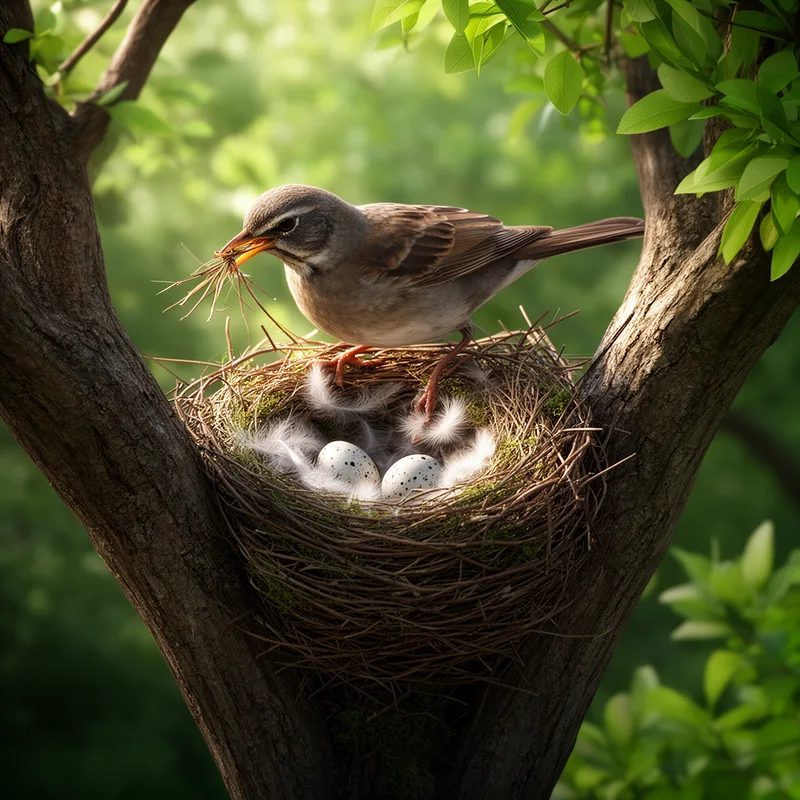
nesting
- noun
- /ˈnɛstɪŋ/
- Just like when we watch birds in the garden and, and they're building nests, you see that it's not built in one day.
- nesting made of sticks
- nesting in stick nests
Loading YouTube…
Watch on YouTubeRN asks how do bees decide to build a nest?
- RN asks how do bees decide to build a nest?
- Yeah, but, well, how's that different than a than a bird creating a nest on top of a tree and then fights off other birds on top of a tree?
Examples
-
It's nightingale's droppings from their nest, you know?
-
So C this is the nesting sites of Patagonian seabirds.
-
So anyway, we will work on that and the nesting box it is.
-
This is a male on his nest and he is nesting in algae.
-
So over thousands of years, all, a lot of the birds and turtles, they developed ground nesting because there were no predators to eat their eggs.
-
Yeah, but, well, how's that different than a than a bird creating a nest on top of a tree and then fights off other birds on top of a tree?
-
But she'll also eat beetles and worms and eggs, baby birds that are nesting on the ground or small rodents.
-
They are, they create huge nests, just enormous, sometimes networks of nests.
-
Among the most benign, black headed ducks lay their eggs in other nests to be incubated.
-
Many birds return to the same location each year for nesting during the spring.
Antonyms




Compounds

Surface Forms
Morphology
Etymology
Nesting comes from nest, a bird's home, and means 'making or living in a nest', just like birds build nests in spring to keep their eggs safe.