
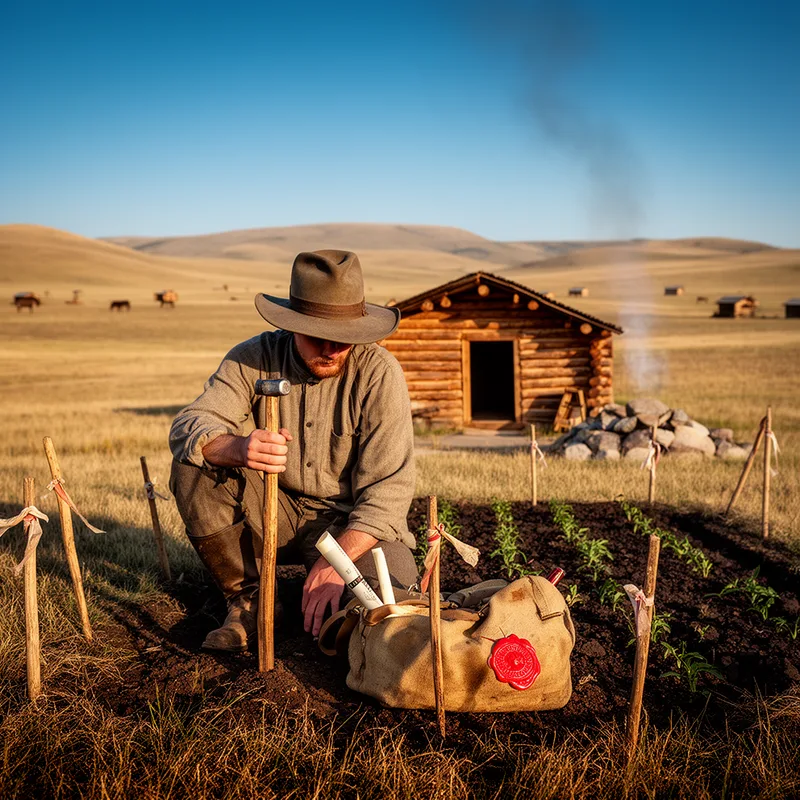
nester
- noun
- /ˈnɛstər/
- Archaic
Examples
-
As a nester, she hoped her claim would soon become permanent.
-
Many nesters built cabins and started farms on the western frontier.
-
The homestead laws allowed a nester to settle on public land and eventually gain ownership.
-
The nester claimed the land after living there for five years.
-
Many nesters are looking to settle in the new development.
-
The homesteaders, known as nesters, established their farms on the government land during the 1800s.
-
In the rugged wilderness, many nesters claimed their plots under the Homestead Act.
-
The community welcomed new nesters eager to cultivate the land and build their future.
Synonyms
 7
6.9
7
6.9

A person who moves to empty land and works it so the government lets them own it
 1
7.1
1
7.1
A person who moves onto government land to own it after meeting rules

A person who has the legal right to buy land before others
Compounds

Surface Forms
Morphology
Etymology
Nester comes from nest ('home') plus -er ('one who'), giving the image of someone making a home in a place. So a nester can mean a person who settles on land to live there and try to make that home theirs.