
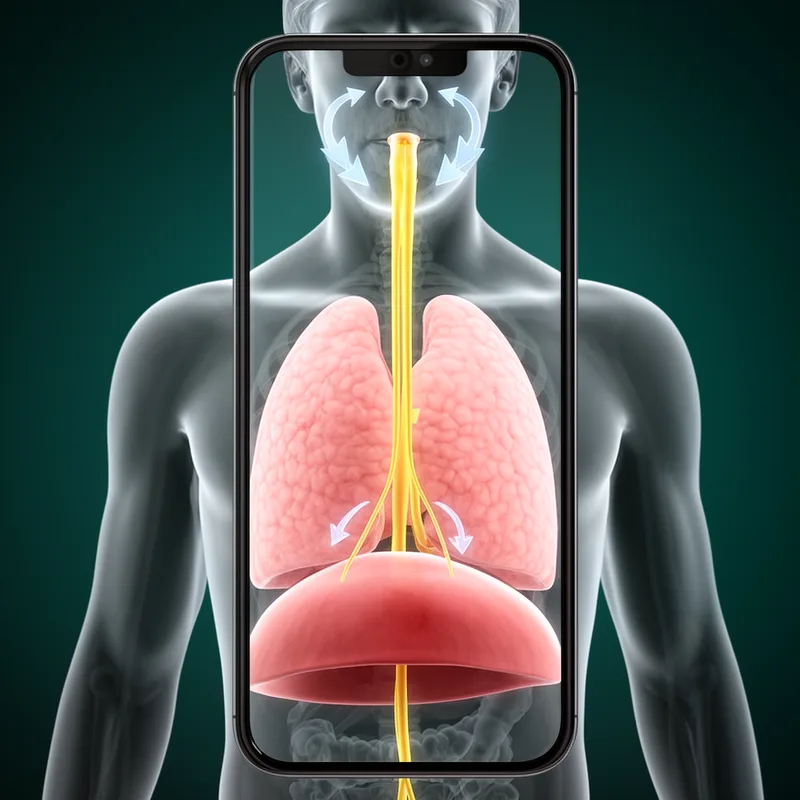
nervus phrenicus
- noun
- /ˈnɜrvəs ˈfrɛnɪkəs/
- Specialized
- Damage to the nervus phrenicus can result in paralysis of the diaphragm.
Examples
-
Stimulation of the nervus phrenicus can be used to test diaphragmatic function.
-
The surgeon carefully avoided the nervus phrenicus during the chest procedure.
-
The nervus phrenicus is essential for proper breathing.
-
Injury to the nervus phrenicus can lead to respiratory issues.
-
Damage to the nervus phrenicus can result in paralysis of the diaphragm.
-
Injury to the nervus phrenicus can lead to respiratory issues.
-
The surgeon carefully avoided the nervus phrenicus during the chest procedure.
Synonyms
 1
8.3
1
8.3

A nerve from the neck that controls the diaphragm and breathing
Surface Forms
Morphology
nervus + phrenicus
This is a Latinized anatomical name: 'nervus' means 'nerve' but 'phrenicus' (relating to the diaphragm) is specialized and not a transparent English word for a B1 learner. Because the second element is technical/unclear and the compound is a specialist term, an average B1 learner who knows the parts would not reliably derive the full meaning (the phrenic nerve that innervates the diaphragm).
Etymology
Nervus phrenicus is Latin and literally means 'nerve of the diaphragm'. The word nervus means 'nerve' and phrenicus comes from an old Greek word for the diaphragm, the large muscle we use to breathe, so the name tells us this nerve controls breathing.