
nephrite


 1
9.9
1
9.9
- noun
- /ˈnɛfraɪt/
- Specialized
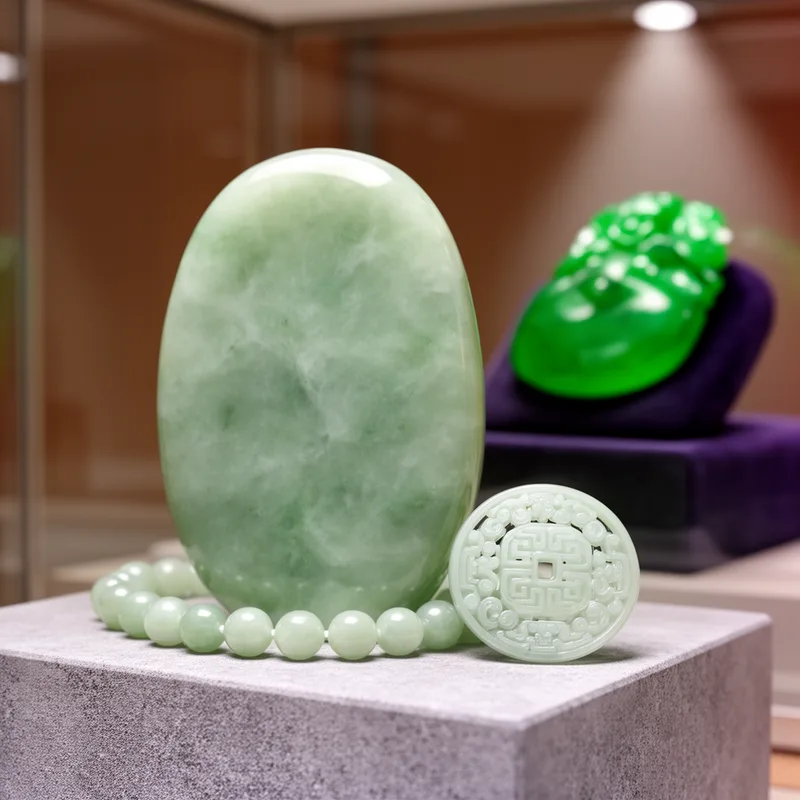
- Many ancient cultures valued nephrite for its beauty and used it to create intricate carvings and jewelry.
- nephrite and gold
Examples
-
(Ironically, the term nephrite derives from the Latin lapis nephriticus, coined by Europeans to apply to Mesoamerican jade.
Academic text (1992) -
PHOTO (COLOR): An amulet carved from nephrite, a kind of jadestone that was one of many natural resources new to New Zealand's first settlers.
Academic text (2003) -
Each container is made of pale nephrite jade.
-
There's trace deposits of nephrite jade all through these islands.
-
The term jade is a fuzzy one, embracing a range of different rocks, the most important of which are jadeite rock, or jadeitite, and nephrite.
Academic text (1992) -
The jeweler explained that nephrite is less expensive than jadeite but still prized for its unique green color.
-
In the museum, there was a stunning sculpture made of nephrite, showcasing its smooth texture and rich hue.
How Hard

Surface Forms
Morphology
nephrite = nephro + ite
Although analyzable as the combining form 'nephro-' (kidney) + the mineral suffix '-ite', the meaning 'a form of jade' is not derivable by an average learner from those parts.
Etymology
The word nephrite comes from the Greek word nephros, which means 'kidney'. People once thought these stones could help the kidneys, so the name stuck, and today nephrite means the green or whitish mineral that is a common form of jade.