
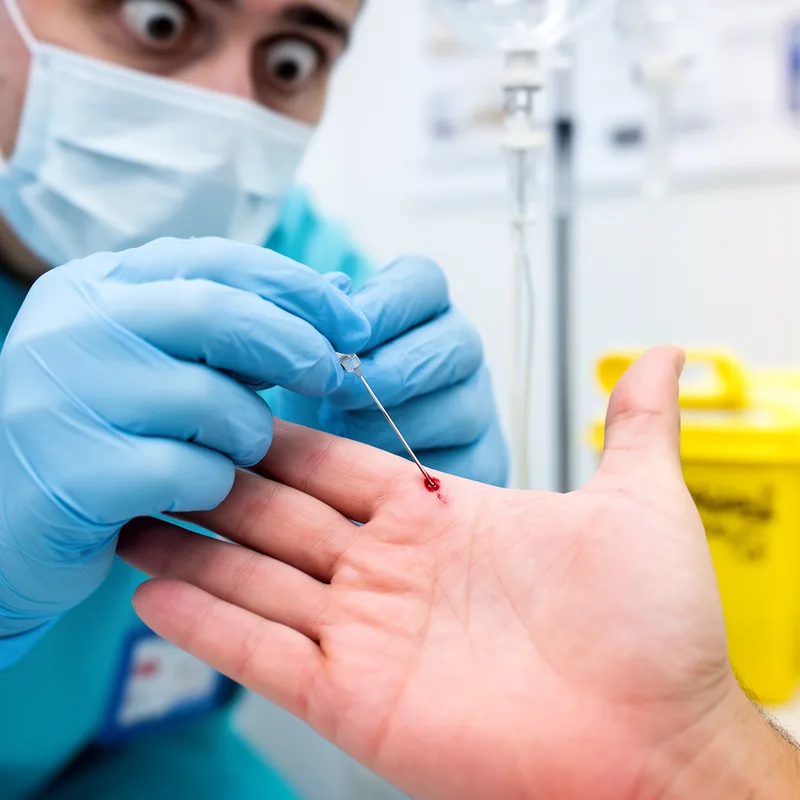
needlestick
- noun
- /ˈnidəlˌstɪk/
- Specialized
- The report discusses the use of new devices designed with needlestick prevention features and gives examples and data supporting their effectiveness.
- needlestick injury
- risks of needlestick
Examples
-
Some data even suggest that in an average hospital, workers incur approximately 30 needlestick injuries per 100 beds per year.
Academic text (2000) -
With a comprehensive program that accounts for all of these factors, hospitals can significantly reduce the risks of needlestick injuries to their workforce.
Academic text (2000) -
Preventing needlestick injuries in the healthcare setting
Academic text (2000) -
First, is the avoidance of needlestick injury.
Academic text (1992) -
Modify work practices that pose a needlestick injury hazard to make them safer.
Academic text (2000) -
Report all needlestick and other sharps-related injuries promptly to ensure that you receive appropriate follow-up care.
Academic text (2000) -
Needlestick injuries (NSIs) are one of the most common injuries for healthcare workers.
Academic text (2014) -
To protect themselves and their coworkers, healthcare workers should be aware of the hazards posed by needlestick injuries and should use safety devices and improved work practices.
Academic text (2000) -
Although it may not be possible to completely eliminate risk from the workplace, it is clear that preventing needlestick injuries is the best way to prevent transmission of blood-borne pathogens and the spread of disease.
Academic text (2000) -
In hospitals, needlestick injuries are a significant concern for healthcare workers who handle needles.
How Severe


Surface Forms
Morphology
Etymology
Needlestick is made from the common words needle and stick, so picture a needle 'sticking' into the skin. That's why a needlestick means an accidental puncture of the skin by a needle.