
necrophagy
- noun
- /nɛkˈrɒfədʒi/
- NSFW
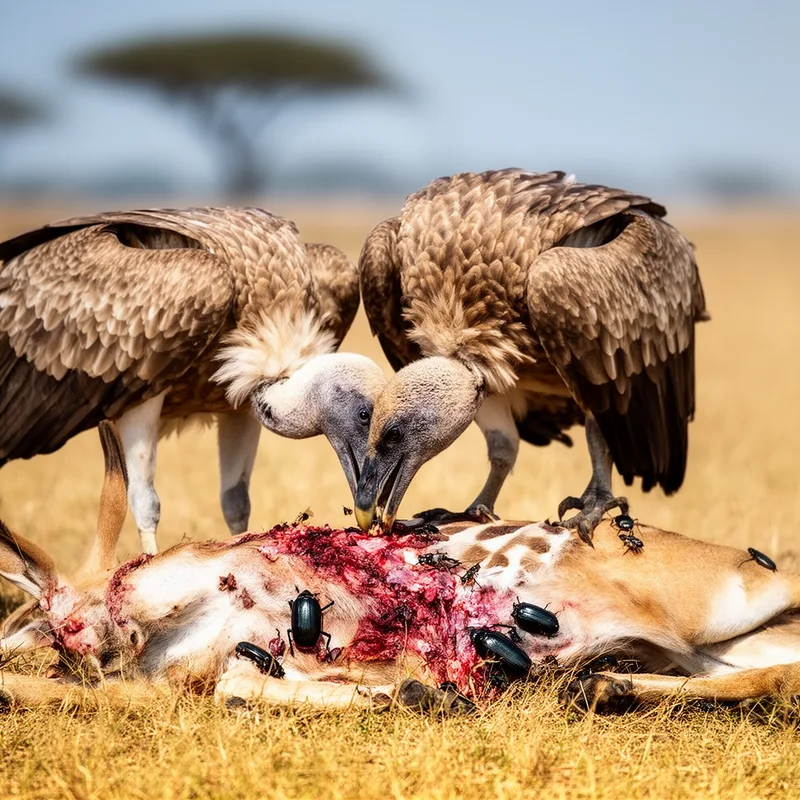
- Vultures are often seen feeding on carcasses, a clear example of necrophagy in nature.
Examples
-
Many beetles and flies practice necrophagy as part of the natural decomposition process.
-
Vultures engage in necrophagy to survive.
-
The study of necrophagy is important in understanding nutrient cycles in ecosystems.
-
Vultures are known for their specialized adaptation to necrophagy.
-
The study of necrophagy reveals much about ecosystems.
-
Many insects, such as certain beetles, exhibit necrophagy by consuming decaying organic matter.
-
Researchers study necrophagy to learn more about how ecosystems recycle nutrients.
Synonyms


 1
9.9
Eating dead animals, often by birds or insects
Surface Forms
Morphology
necrophagy = necro + phagy
Formed from Greek combining forms 'necro-' (dead) and '-phagy' (eating) that are not standalone English words and thus not easily decodable by an average B1 learner.
Etymology
The word necrophagy comes from the parts necro- meaning 'dead' and -phagy meaning 'eating', so it literally means 'eating the dead'. That's why the word is used for animals or insects that feed on dead bodies.