
navigability
- noun
- /ˌnævɪˈɡæbɪlɪti/
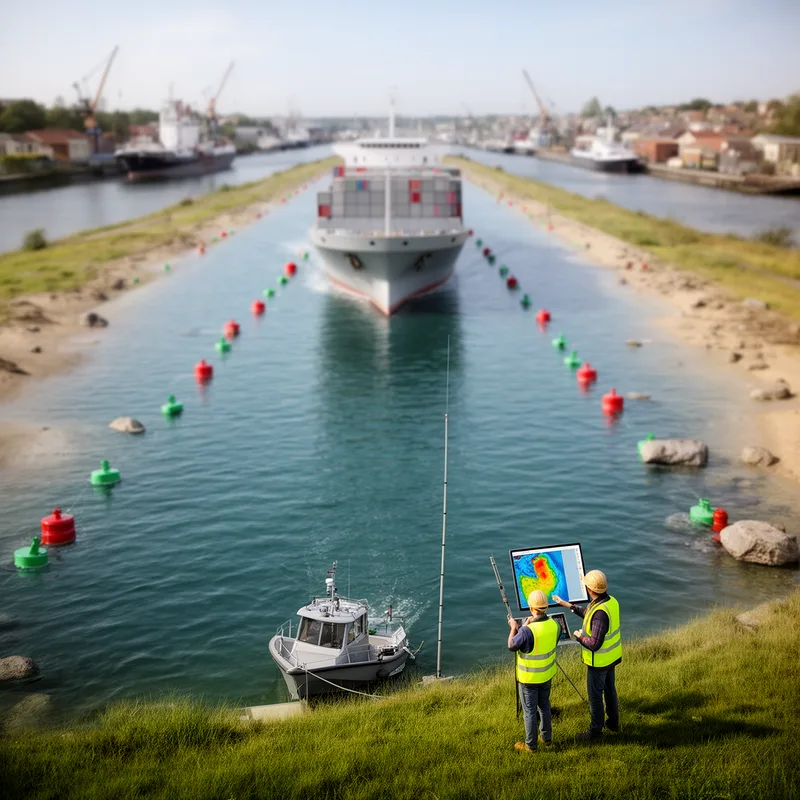
- The construction of new locks improved the navigability of the canal, allowing larger vessels to pass through.
Examples
-
Reasoning that the importance of the lakes necessitated their protection in the future, the court concluded that it should not define navigability narrowly.
Academic text (1992) -
Eighteen courts likewise diluted navigability as a prerequisite for trust application.
Academic text (1992) -
The next day, Hennepin told the elders that God spoke to him during the night and informed him of the navigability of the Mississippi.
Academic text (2001) -
Established in 1815, the Rhine Commission was created by the Rhine River's bordering states to improve navigability and the condition of towpaths.
Academic text (2017) -
It is time to recognize that all natural resources—not just those associated with tides, navigability, and water—require trust protection.
Academic text (1992) -
The film offers an acutely contemporary vision (the "goods" that are smuggled across the border are not contraband cigarettes but illegal immigrants); nevertheless, the navigability of both the river and the border is held to be a foundational condition of Mohawk experience.
Academic text (2011) -
The navigability of the Amazon River allows large cargo ships to transport goods deep into the rainforest.
-
Ensuring the navigability of the Great Lakes is vital for the shipping industry and local economies.
Synonyms
How easy it is to cross a road or obstacle
How Navigable


Surface Forms
Morphology
Etymology
Navigability comes from the old root navis, which means 'ship', the same root you see in navy and navigation. So navigability describes how easy it is for ships to pass through a river, canal, or sea, which is why we use it for waterways.