

native pear


 1
9.9
1
9.9
- noun
- Australian
- The native pear is often found growing wild in sandy soils across the countryside.
Examples
-
The native pear tree grows well in dry climates.
-
The thick skin of the native pear protects its seeds from harsh environmental conditions.
-
Birds and other wildlife consume the fruit of the native pear during the dry season.
-
I saw a native pear at the botanical garden.
-
The native pear tree grows well in the warm, dry climate of Australia.
-
Many kangaroos feed on the fruit of the native pear during the summer months.
-
The gardener planted a native pear to enhance the biodiversity of the local area.
Synonyms

A tree from Australia that makes pear-shaped fruit with hard woody skin
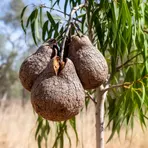
A tree from Australia with hard pear-shaped fruit and a thick woody shell
Surface Forms
Morphology
The phrase combines 'native' (indigenous) with 'pear' (a fruit/tree) in a straightforward noun–noun composition, so a B1 learner who knows both constituents would infer it refers to a pear or pear-like tree that is native to a region. There is no idiomatic or highly metaphorical shift here, and the meaning follows regular compositional patterns found across languages.
Etymology
Native pear: The name native pear comes from people calling a local tree a native plant whose fruit looks like a pear, because the fruit is pear-shaped and often has a thick, hard skin. That's why native pear means 'a local tree that bears pear-like fruit'.