
myrmecophagous
- adjective
- /ˌmɜr.mɪ.kəˈfɑː.ɡəs/
- Specialized
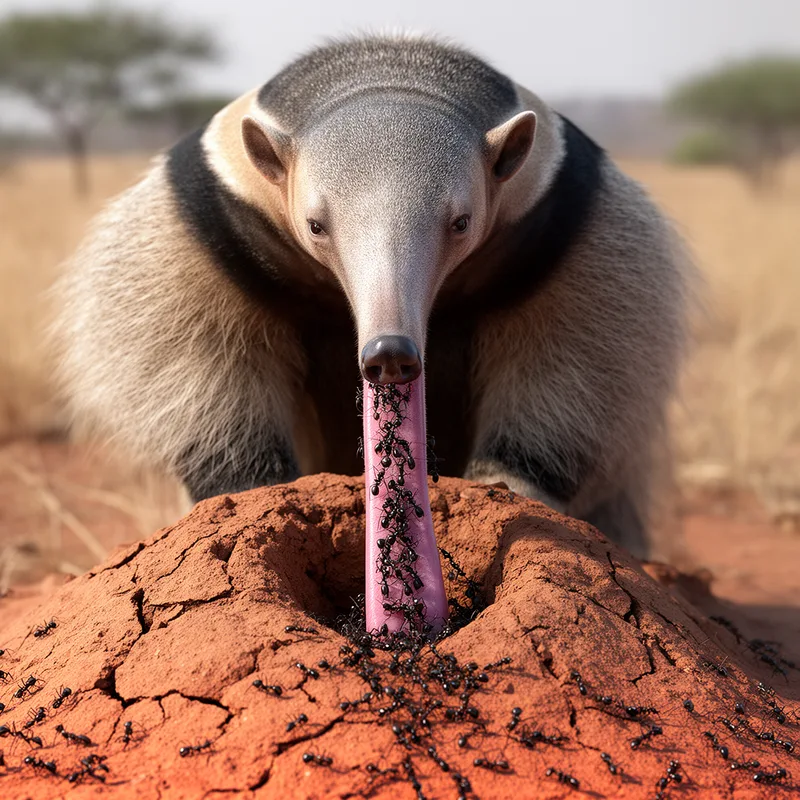
- The myrmecophagous anteater has a long tongue adapted for consuming ants and termites.
Examples
-
Several lizard species exhibit myrmecophagous behavior in arid environments.
-
Many myrmecophagous species thrive in tropical environments.
-
Scientists studied the myrmecophagous habits of the aardvark in the African savanna.
-
The myrmecophagous anteater has a long snout.
-
The myrmecophagous anteater has a long tongue adapted for consuming ants and termites.
-
Scientists studied the myrmecophagous habits of the aardvark in the African savanna.
-
Several lizard species exhibit myrmecophagous behavior in arid environments.
Surface Forms
Morphology
myrmecophagous = myrmec + phagous
The word is built from specialized Greek combining forms (myrmec- 'ant' + -phagous 'eating') that are not productive or recognizable to average B1 learners, so its meaning is not derivable from familiar English base words.
Etymology
Myrmecophagous comes from Greek parts: myrmeco- meaning 'ant' and -phagous meaning 'eating'. So a myrmecophagous animal is one that eats ants as its main food.

