
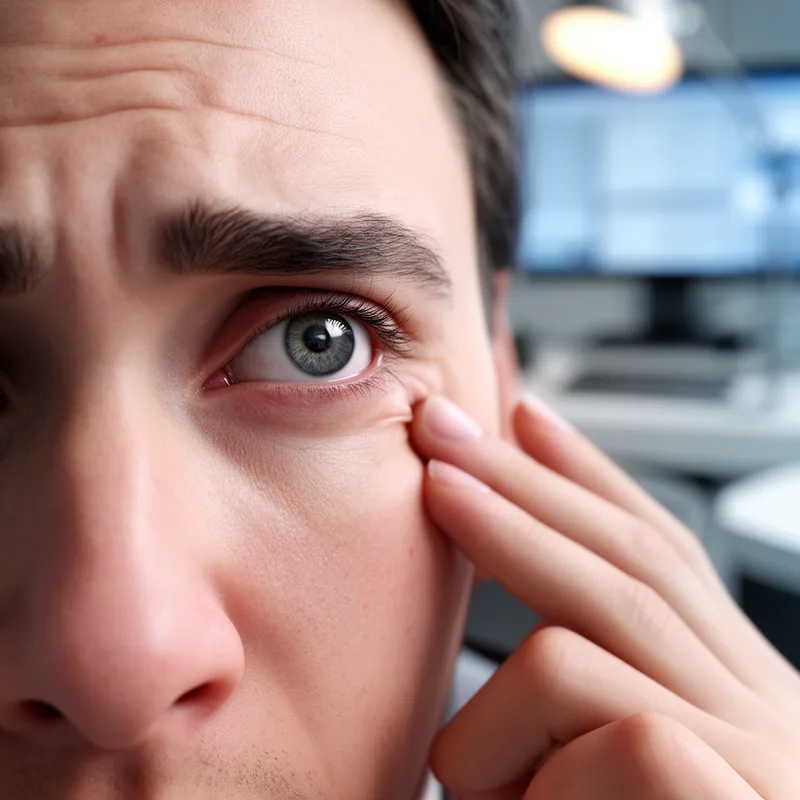
myokymia
- noun
- /ˌmaɪəˈkaɪmiə/
- Specialized
- It is called eyelid myokymia, which is a sub-form of the uncontrolled spasm of muscle tissue called in general myoclonus.
Examples
-
People experiencing myokymia often notice small muscle contractions in their face.
-
I myself suffered from myokymia when I was your age.
Fiction book (1996) -
Myokymia of the eyelid.
Fiction book (1996) -
The doctor explained that myokymia can cause involuntary twitches in the eyelids.
-
After several weeks of treatment, her myokymia improved significantly.
Synonyms

 12
4.3
12
4.3

A quick, sudden movement of a muscle you cannot control, often in an eyelid


 1
9.9
1
9.9
A small quick muscle twitch you can see under the skin
 1
9.9
1
9.9
A sudden muscle twitch you cannot control

Small muscle movements you cannot control in one part of the body

A condition where the eyelid muscles make the eyelids close without meaning to
How Frequent
- Specialized
 66
2.8
66
2.8
Surface Forms
Morphology
myokymia = myo + kym + ia
The term is built from Greek combining forms (myo- 'muscle' + kym- + the medical suffix -ia) and is a specialist medical label, so its meaning is not derivable by an average B1 learner from the parts.
Etymology
Myokymia comes from Greek parts: myo- meaning 'muscle' and -kymia meaning 'wave' or 'twitch'. So, think of it as a 'muscle wave' — small involuntary twitches under the skin, often in the eyelid.