
myoglobin
 3
8.3

- noun
- /ˌmaɪəˈɡloʊbɪn/
- Specialized
- Overloaded by the elevated levels of myoglobin, the kidneys can struggle, leading to renal failure in some severe circumstances.
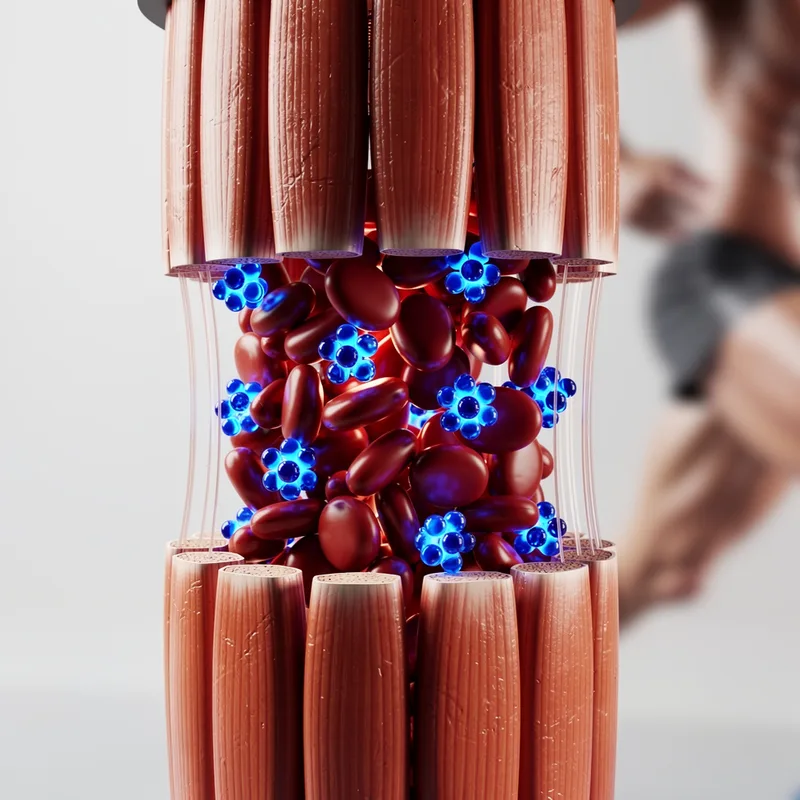
- myoglobin in muscle
Examples
-
Myoglobin is filtered by the glomerulus, initially appearing as casts.
Academic text (2005) -
Myoglobin is an oxygen-carrying protein that has an increased affinity for oxygen, more so than hemoglobin.
Academic text (2005) -
Myoglobin may also have a toxic effect on the kidneys.
Academic text (2004) -
It's in this same temperature range that the pigment myoglobin (which is what makes raw meat look red) denatures and turns grayish brown.
Academic text (1999) -
Myoglobin, a dark-red protein, makes the urine reddish-brown (Dayer-Berenson, 1994).
Academic text (2005) -
Myoglobin content in muscle tissue is approximately 0.3% (Dhawan, Jyothinagaram, & Schwartz, 2005).
Academic text (2005) -
In the presence of exertional muscle injury in Type II muscle fibers, myoglobin is released from muscle, subsequently entering the systemic circulation (Dhawan et al., 2005).
Academic text (2005) -
The high levels of myoglobin in red meat give it a darker color compared to white meat.
-
Athletes often have more myoglobin in their muscles, allowing them to perform better during endurance activities.
-
Deep-diving mammals such as Weddell seals have unusually high concentrations of myoglobin in their cells, and so do emperor penguins.
Surface Forms
Morphology
Etymology
The word myoglobin breaks into two parts: myo- meaning 'muscle' and globin from a word for a 'small round thing' like a globe. So myoglobin is a red protein in muscle that you can picture as tiny round balls that hold oxygen for the muscles.