
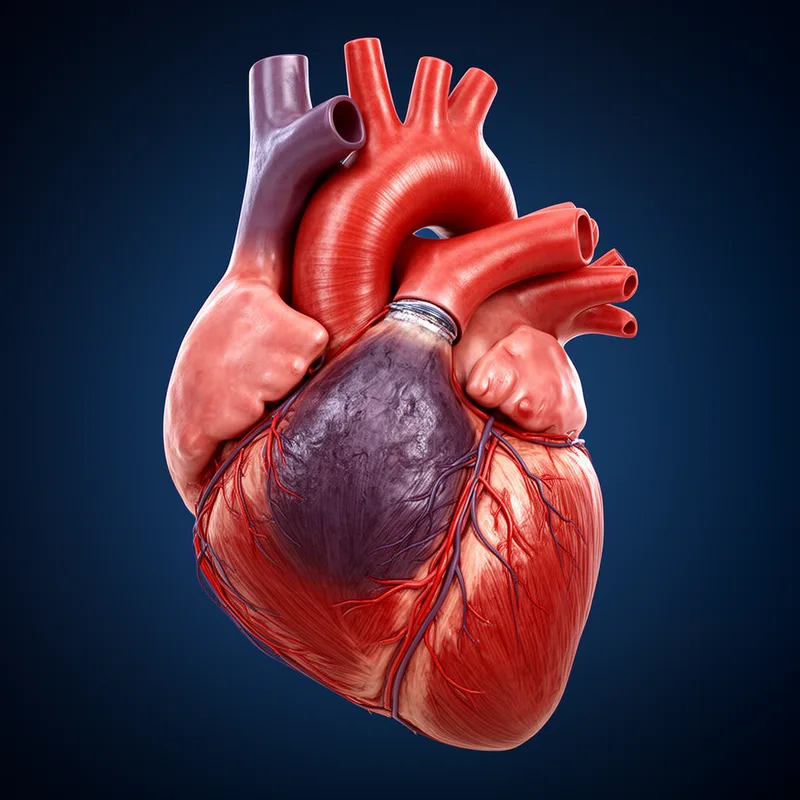
myocardial infarction
 7
5.3
7
5.3

- noun
- /ˌmaɪəˈkɑrdɪəl ɪnˈfɑrkʃən/
- Specialized
- The symptoms you've had can be a sign of myocardial infarction, a heart attack.
- acute myocardial infarction
- fatal myocardial infarction
- risk of myocardial infarction
Loading YouTube…
Watch on YouTubeThe single most common presentation for a myocardial infarction is death.
- The single most common presentation for a myocardial infarction is death.
- Also, people with recent myocardial infarction.
Examples
-
Consequently, persons with carotid artery plaques are at increased risk for myocardial infarction.
Academic text (2012) -
Several investigators have reported an increased risk of myocardial infarction and stroke associated with OSA.
Academic text (1999) -
The single most common presentation for a myocardial infarction is death.
-
In our study, the proportion of patients with myocardial infarction was similar in the two study groups.
Academic text (2000) -
George is 65 years old and has just been discharged from the hospital after a myocardial infarction.
Academic text (2011) -
Approximately 7% of the cohort reported a history of myocardial infarction, 4% stroke, and 9% diabetes
Academic text (2012) -
All patients were followed in the outpatient clinic, and none had an acute myocardial infarction.
Academic text (1994) -
Post-hoc analysis suggested a poorer outlook for patients with myocardial infarction, independently of the therapy used.
Academic text (2000) -
He suffered a massive coronary, brought on by anterior myocardial infarction.
-
The symptoms you've had can be a sign of myocardial infarction, a heart attack.
Synonyms
 433
2.0
433
2.0
A sudden serious illness when blood cannot reach the heart
 14
8.9
14
8.9
Death of part of the body when its blood supply is blocked, often by a clot
 9
4.8
9
4.8
Damage to the heart muscle when a blood vessel is blocked, called a heart attack

Damage to the heart muscle when blood flow stops, often called a heart attack
Surface Forms
Morphology
Both components are semantically transparent: 'myocardial' refers to the heart muscle and 'infarction' refers to tissue death from a blocked blood supply, so the compound straightforwardly denotes death/destruction of heart muscle (a heart attack). Although the term is technical in register, its meaning is directly compositional and cross-linguistically parallel, so a learner who knows the constituents will understand it.
Etymology
Myocardial infarction is a medical name made from older word parts: myo- means 'muscle', cardial means 'heart', and infarction means tissue dying because the blood is blocked. So the term literally says 'heart muscle dying after a blocked blood flow', which is why it is used for a 'heart attack'.