

myeloid leukemia
 1
5.6
1
5.6

- noun
- /ˈmaɪəˌlɔɪd luˈkiːmiə/
- Specialized
- During World War II, Dr. Robert Fink of the University of Rochester gave Po-210 water to a patient with myeloid leukemia and four others as part of a medical experiment.
- chronic myeloid leukemia
- treatment of myeloid leukemia
Examples
-
First, it blocks the tyrosine-kinase activation of abl/bcr-abl, which is a therapeutic strategy used in the treatment of chronic myeloid leukemia.
Academic text (2012) -
I have acute myeloid leukemia.
-
Joseph Phillips was diagnosed with chronic myeloid leukemia.
Blog text (4) -
High thyroid cancer and myeloid leukemia rates in French Polynesia may be related to nuclear tests conducted by France between 1966 and 1995.
Academic text (2016) -
In the USA, the price of Novartis' imatinib for the treatment of chronic myeloid leukemia has tripled since 2001 to $92,000 per year, although the company received orphan drug incentives for its development and the number of users continues to rise.
Academic text (2016) -
When imatinib mesylate was first developed, it was used in the treatment of chronic myeloid leukemia patients by blocking BCR-ABL tyrosine kinase and inducing apoptosis.
Academic text (2012) -
Last year, my father was diagnosed with myeloid leukemia, a type of blood cancer that mainly affects older adults.
-
The oncologist explained that myeloid leukemia is characterized by an abnormal increase in certain white blood cells.
-
After extensive testing, they confirmed her condition as myeloid leukemia, which is more common in people over the age of 60.
Synonyms
A long-lasting blood cancer that makes too many white blood cells, often in older people

A cancer that makes too many young white blood cells
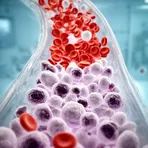
A blood cancer that makes too many young white blood cells
Surface Forms
Morphology
The noun phrase is fully compositional: 'myeloid' (pertaining to bone-marrow/myeloid cells) modifies 'leukemia' (a blood cancer), so the meaning is simply a leukemia affecting myeloid cells. Although the terms are technical, the adjective+disease pattern is a standard, cross-linguistic way to form medical subtypes, making the sense predictable for a learner who knows both constituents.
Etymology
Myeloid leukemia comes from two parts: myeloid points to 'bone marrow', where blood cells are made, and leukemia means 'white blood', or white blood cells. So the name gives a clear picture of bone marrow making too many white blood cells, which is why the disease affects those cells.