

mute
 14
7.2
14
7.2

- noun
- /mjuːt/
- To achieve a mellow tone, the guitarist attached a mute to his instrument before playing.
- use a mute
Examples
-
The orchestra's trumpeters each had a mute for the quieter sections of the piece.
-
Does the mute have a name?
-
Of course, which mute you use is your decision, but we make decisions too!
Academic text (2007) -
'I accidentally hit the mute button.'
-
Thorne hit the mute button, sat back, and enjoyed a sip of his beer.
Fiction book (1999) -
By using the mute feature in the sequencing program, the students can mute the melody without erasing it.
Academic text (1995) -
Students can use Musicshop's on-screen mixer to "mute" or "solo" three individual instruments and to change the balance among instruments.
Academic text (1998) -
Suggest items like music stands, metronomes, mutes, boxes of reeds, extra music books, and other items as Christmas and birthday gifts.
Academic text (1995) -
The musician used a mute to soften the sound of his trumpet during the performance.
Synonyms
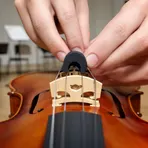
A small piece you put on the bridge of a violin to make the sound softer
Antonyms
Compounds


How Muted
- Specialized
 14
7.2
14
7.2
Surface Forms
Etymology
Mute comes from the old Latin word mutus, which means 'silent'. In music a mute is a small tool you put on a violin or trumpet to make its sound quieter or more muffled, so the origin explains its job of making sound less loud.